
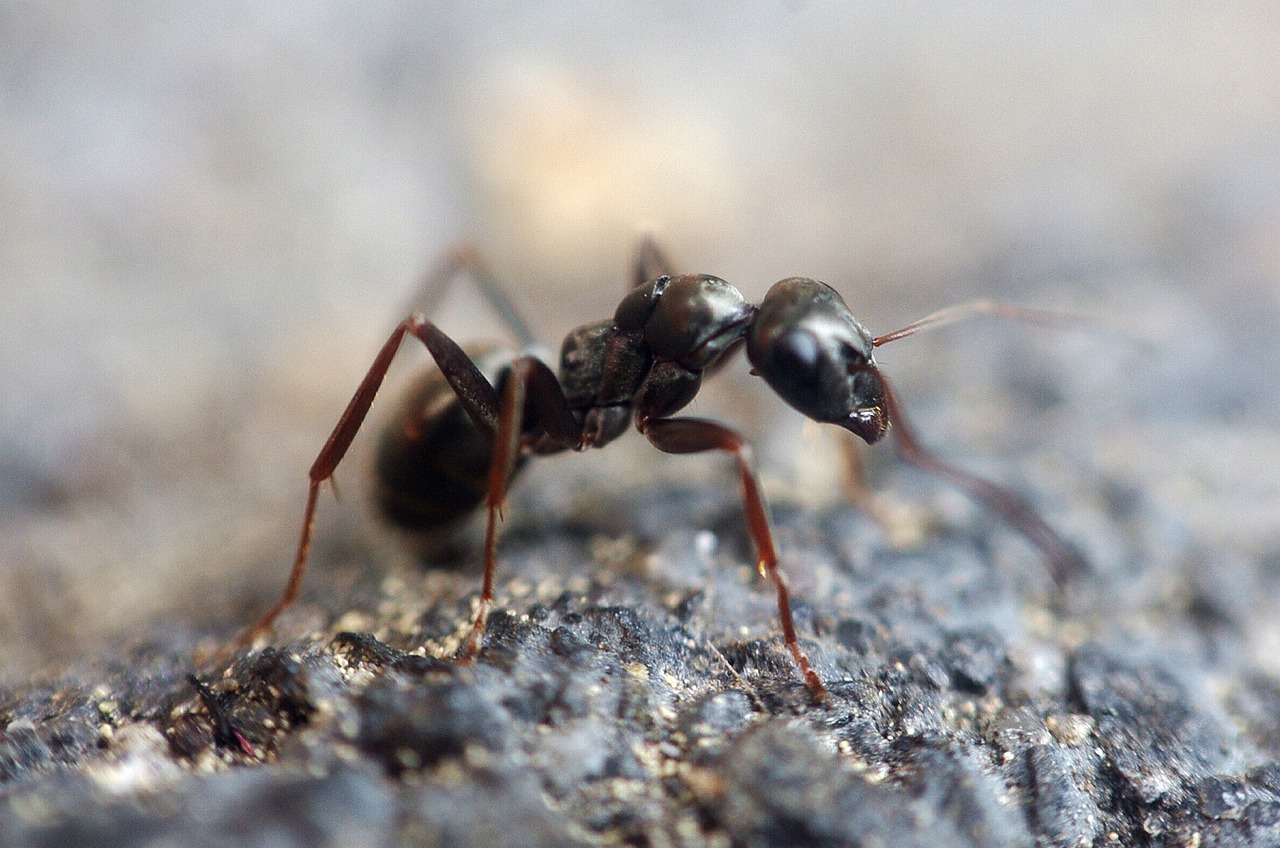
Ants are among the most abundant creatures living on this earth. There are around 20 quadrillion ants on this planet (that is approximately 2.5 million ants for each human!).
With those types of numbers, it’s no surprise that we’re going to encounter ants in our daily lives.
Of course, there are many types of ants and some are a lot more problematic than others. In this article, we’ll specifically look at black ants vs. carpenter ants. Both are unwanted in the house, but carpenter ants are a lot more problematic.
Jump To:
Black Ants vs. Carpenter Ants: Why Identification Matters
What Do Carpenter Ants Look Like?
What Are Regular Black Ants?
What Attracts Ants?
Signs of a Carpenter Ant Infestation
Preventing Ants From Entering Your New England Home
FAQs on Ants
When to Call a Pest Control Professional
Black Ants vs. Carpenter Ants: Why Identification Matters
Nobody wants ants in their home. But black ants in a house are a nuisance whereas carpenter ants can actually lead to structural damage.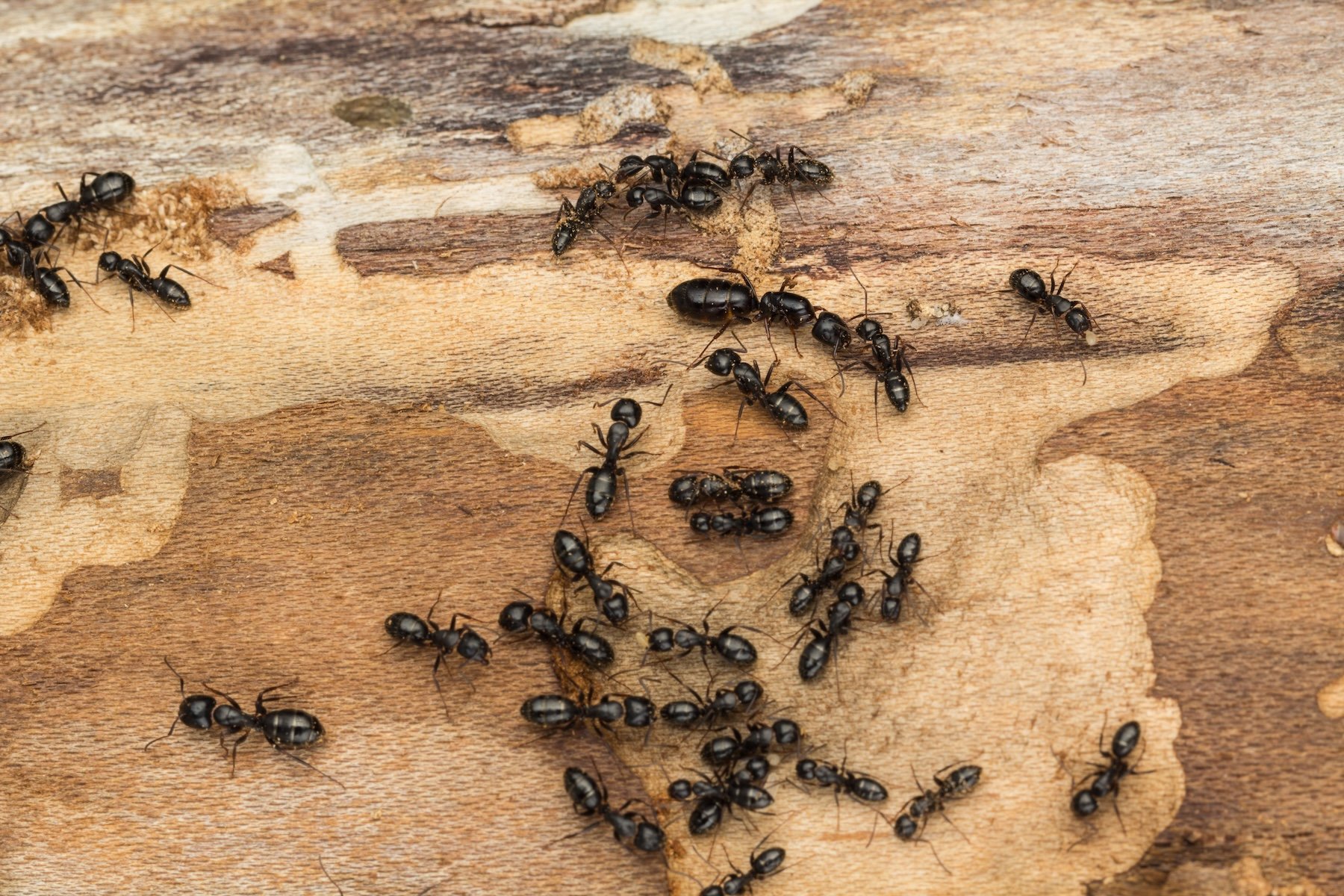
Carpenter ants hollow out wood in order to create nests. Unbeknownst to a lot of people, carpenter ants are not actually feeding on wood (like termites, which consume the cellulose) but instead just chew on it and discard it as they go. They tend to be attracted to damp wood because it is easier to chew.
Regular black ants are nuisance ants that find their way inside, usually in search of food. There are different types of ants that fall under this general umbrella.
Ants live outside and build colonies full of workers. Ants that make their way inside are primarily in search of food. These ants will forage for the tiniest crumbs, so it doesn’t take much to draw them in.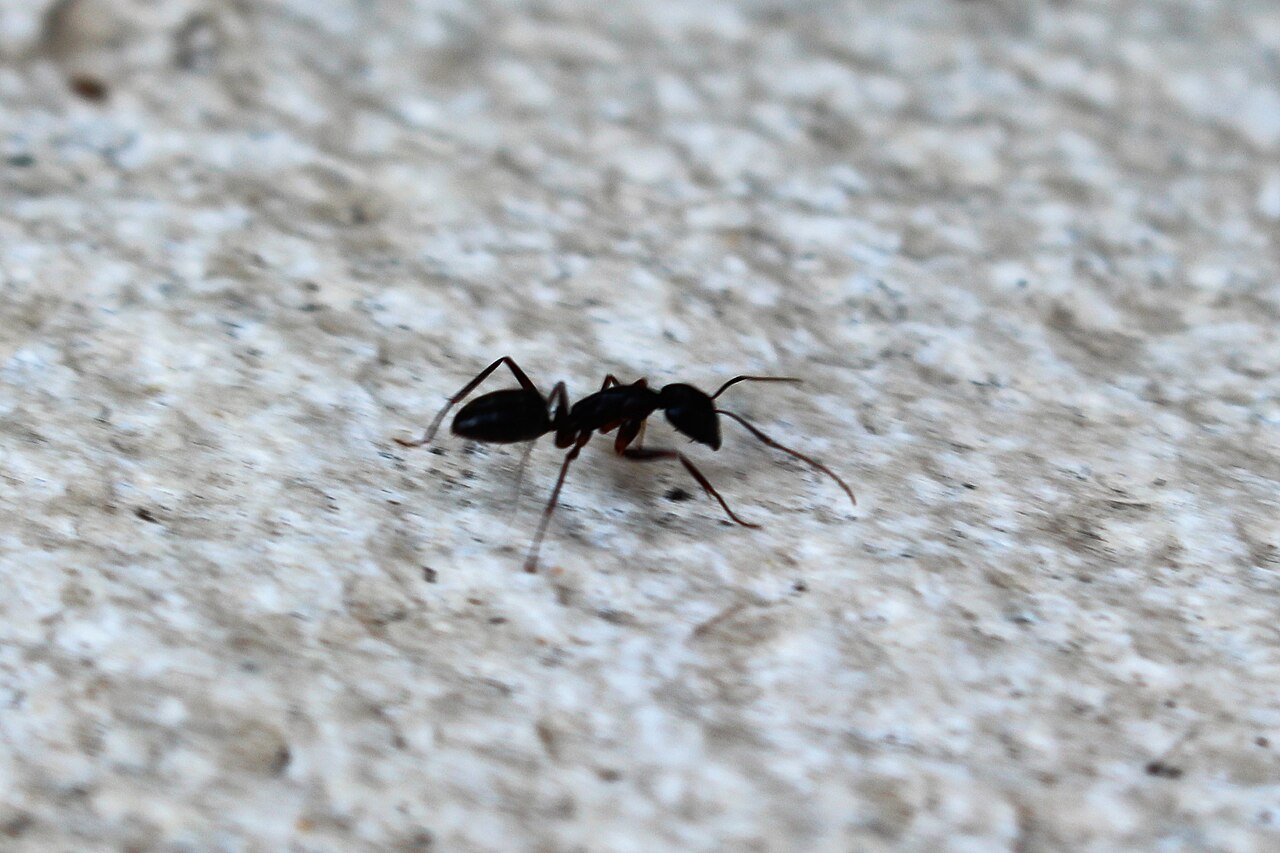
If you spot a singular ant in your kitchen, it’s probably a scout ant. These ants go ahead of the group and search for food. If they find it, they release a pheromone that invites others to join them.
It’s important to identify what type of ant you’re dealing with as carpenter ants have the ability to seriously damage a home.
What Do Carpenter Ants Look Like?
Carpenter ants are large, compared to other types of ants.
They range from a quarter-inch to a half-inch long (though queens can reach up to three-quarters inch). They are usually black (though some species can be brown or reddish) with a pinched waist and bent antennae.
Because they are attracted to damp wood, carpenter ants inside of homes are commonly found around windows or under sinks. They leave behind wood debris called “frass” in their wake.
What Are Regular Black Ants?
Regular black ants is just a general name given to the small black ants that people might find near or inside their home. Most of the time these are odorous house ants or little black ants. Both commonly find their way into homes and are generally harmless, if not a minor nuisance.
If you’re wondering which ant you have in your home, one way to tell them apart is their behavior. Odorous house ants tend to run around kind of wildly whereas little black ants tend to form organized, single file lines. Little black ants are smaller (about half the size of an odorous house ant).
But the most noticeable difference to people is typically that when crushed, odorous house ants release an unpleasant odor.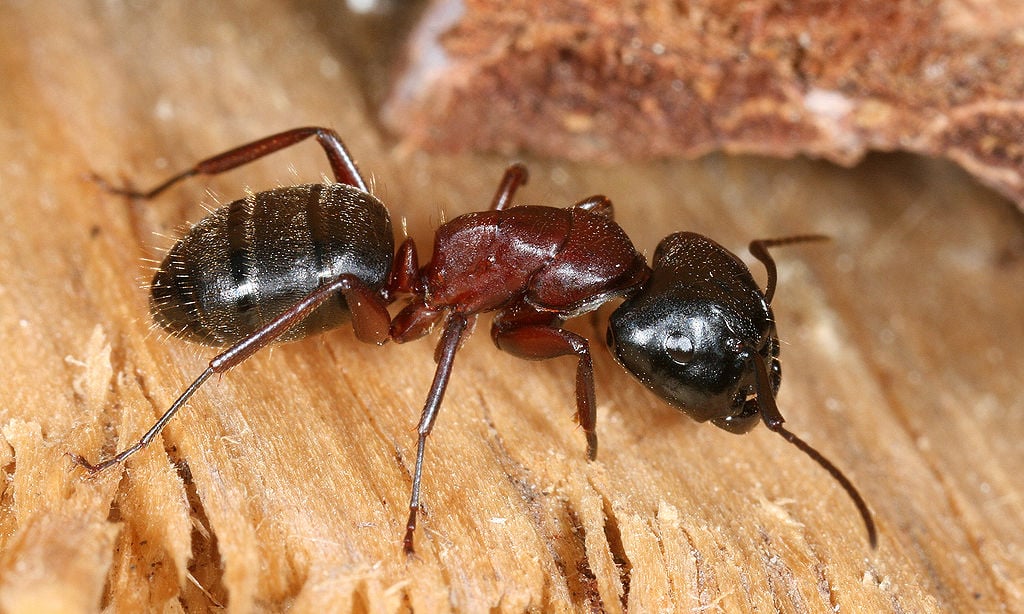
Both of these types of ants plus carpenter ants would be considered “house ants.” Any ant that makes its way into a home can be called a house ant.
If you’re comparing tiny black ants or odorous house ants vs. carpenter ants, the most noticeable difference will be the size. A carpenter ant's size is 2 to 4 times that of a regular black ant.
What Attracts Ants?
Whereas regular black ants are typically attracted to food, it is moisture and decaying wood that can bring carpenter ants near a home.
For regular black ants, outdoor picnics or BBQs can first bring ants closer to the home. As we mentioned, ant colonies usually send their scout ants out and when they locate food sources, they invite their friends to that location.
Carpenter ants are also in search of food sources and can be attracted to dropped food from picnics and BBQs. But it is also decaying wood that’s going to be most inviting to them as they are always in search of places for nesting.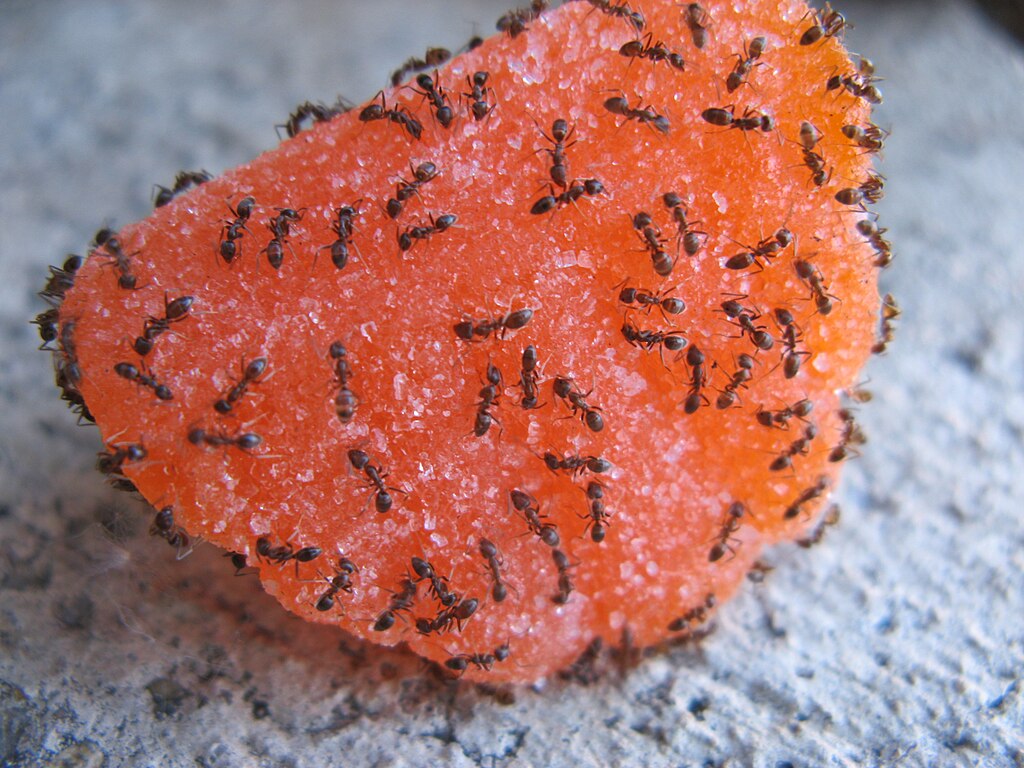
Outdoors, a decaying stump, wet firewood, or rotten branches on the ground can first pull carpenter ants closer to your home. They can eventually make their way inside, where they might find sources of damp wood in your home (like around window sills or under sinks).
Signs of a Carpenter Ant Infestation
Because of a carpenter ant's size it is not that uncommon for homeowners to see the ants themselves. While carpenter ants will build nests in hidden locations, they will leave to forage for food.
Some other signs of a carpenter ant infestation include:
-
Wood shavings: Seeing wood debris (called “frass”) that appears like pencil shavings can be a sign of carpenter ants. Of course, termites can also leave behind wood shavings, so you’ll want to make the proper identification.
-
Noises inside walls: As ants move around inside of walls and chew on wood you might hear scratching, rustling, or tapping sounds. Mice can do this as well so be sure to consult a pest control professional.
-
Wood damage: You might also notice the damage itself. This might include hollowed out wood or tunnels visible in support beams, floorboards, or moulding.
Preventing Ants From Entering Your New England Home
There are some steps that you can take to try and prevent ants from entering your home in the first place. Cleaning up food debris is one important step both inside and outside of the home. Don’t let spills linger and vacuum up those crumbs.
You also want to make sure that you regularly take garbage out and cover any food that’s left out.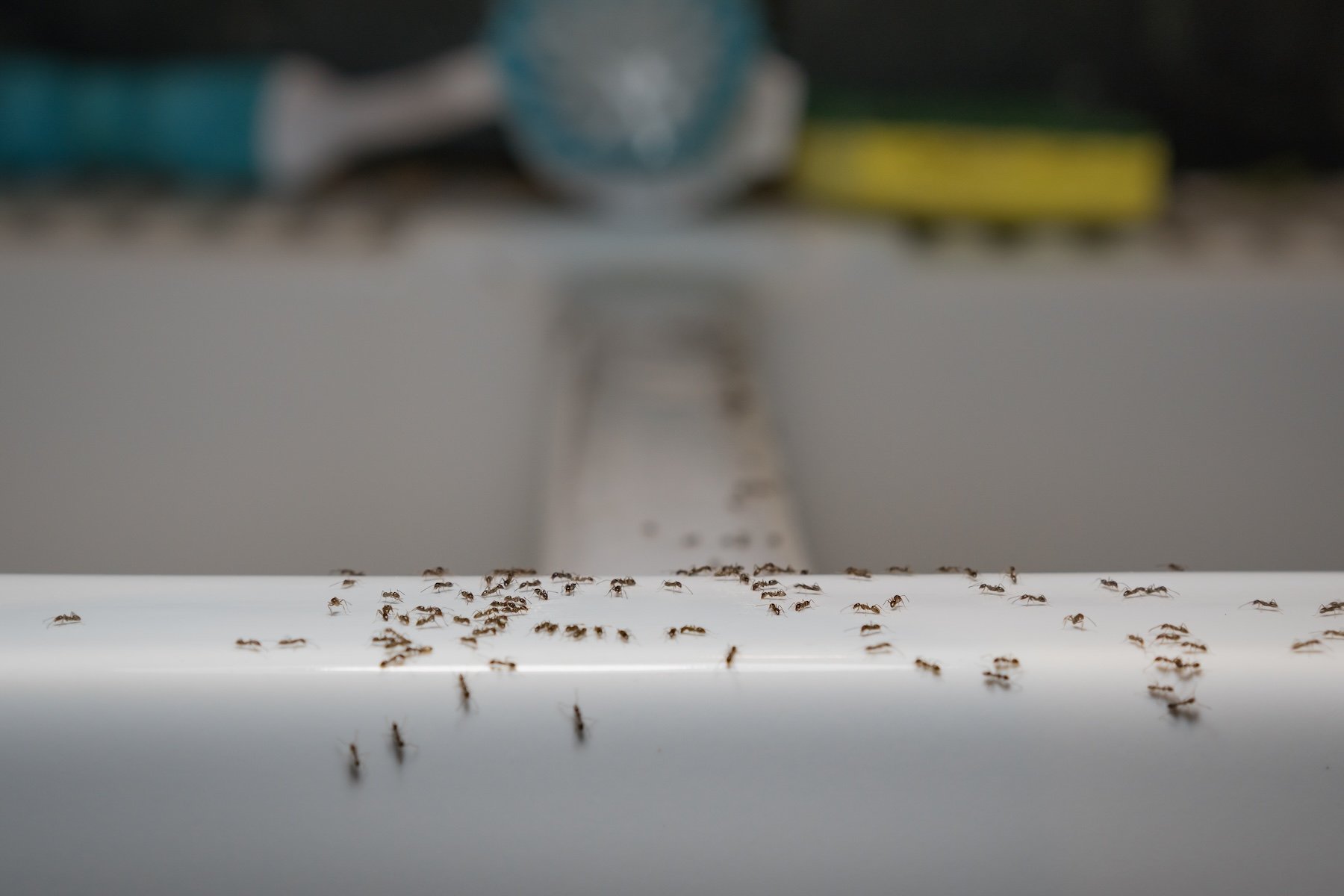
Since ants are usually in search of food, sometimes it’s outdoor parties or picnics that initially draw ants close to your home. If you are serving food outside, still make an effort to clean up any spills and bring all food inside when the party is done.
You can also make an effort to seal up cracks and crevices where ants or other pests might be coming through.
As far as carpenter ants, you should also take steps to reduce damp wood near and around the home. That might mean covering a wood pile, getting rid of a stump (something our sister company, Seacoast Tree Care can handle), or picking up fallen limbs instead of leaving them to rot.
While these steps will help, ants are pretty persistent. For that reason, you’ll also want to invest in pest control.
With proactive, quarterly treatments, you can keep most pests out. If you have an existing problem, that will be addressed first. At Seacoast Turf Care, we know that carpenter ants can be incredibly destructive. We will identify the source of the colony and address them there.
Going forward, you can focus on preventing pests in the first place.
FAQs on Ants
What is the difference between black ants and carpenter ants?
Carpenter ants are larger ants that can cause structural damage whereas regular black ants are just a nuisance pest that end up inside of the home in search of food and shelter.
Do carpenter ants really eat wood?
Carpenter ants do not actually consume the wood but rather just chew it and tunnel through it to form their nests.
Are all black ants odorous house ants?
No, odorous house ants are just one type of ant that is small and black. Tiny black ants are another very common house ant.
What’s the best way to keep ants out of my house?
Cleaning up food debris, sealing entry points, and investing in professional pest control are the best ways to keep ants out of your home.
When to Call a Pest Control Professional
Investing in pest control in Southern NH, Northeastern MA, and Southern ME is a great way to protect your home from pests like ants.
At Seacoast Turf Care, our pest control services cover not only ants but most of the other common household pests, too. That also includes stinging insects (typically found outside, but that may accidentally come in). And it covers mice.
If you truly want peace of mind that you’re keeping pests away, investing in professional pest control is a wise choice. By taking the right steps, you’ll be able to get back to enjoying life as usual.
Want to learn more about how pest control services can protect your family and give you peace of mind? At Seacoast Turf Care, we service NH towns near Stratham, North Hampton, Exeter and many more. Get pest control pricing for your Southern NH, Southern Maine, or Northeastern Massachusetts property.
Image Sources: black ant, carpenter ant, ants on candy
Ready to get the lawn you've been wishing for?