

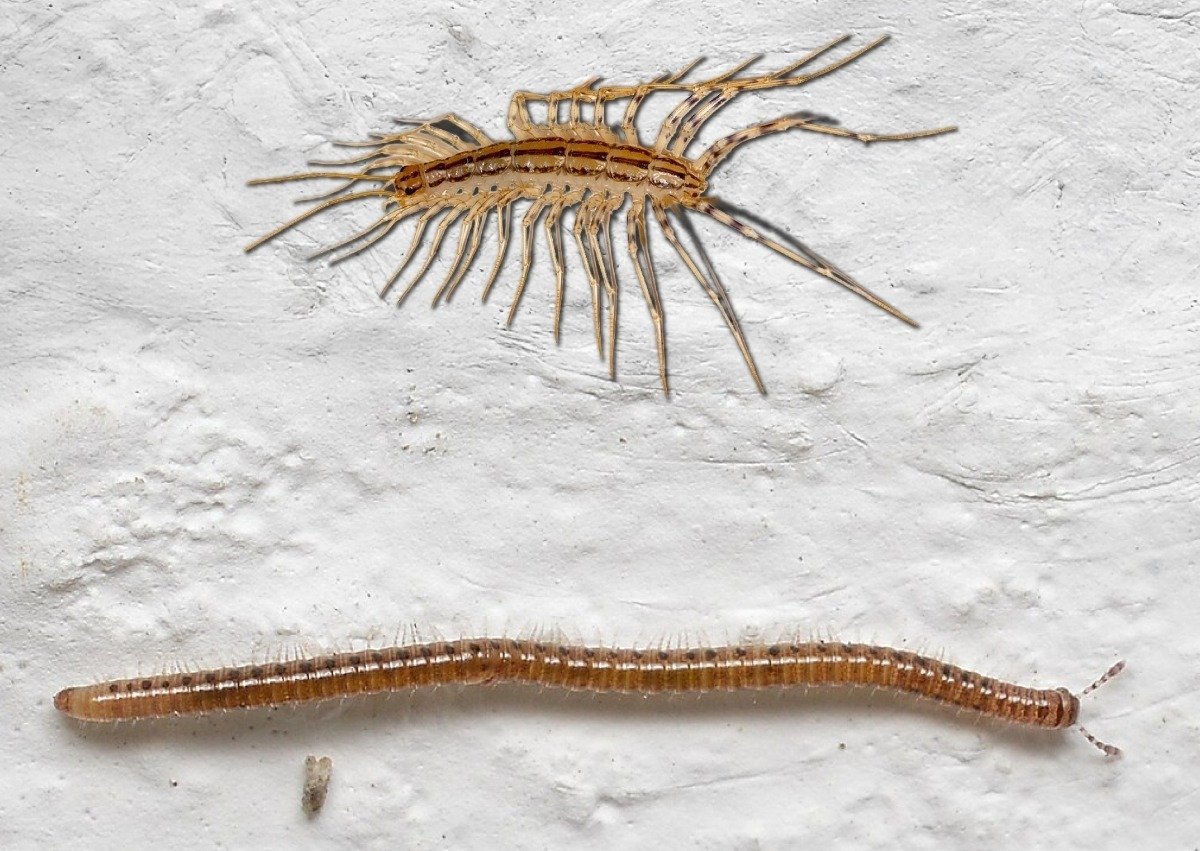
While you probably hate finding any sort of pest lurking around your home, homeowners often say that house centipedes and millipedes are particularly alarming due to their creepy crawly vibes. These many-legged creatures give people a shock when they are spotted scurrying about the house.
Both centipedes and millipedes belong to the same subphylum of arthropods called Myriapoda. That’s a Greek word that means “countless feet.”
While millipedes and centipedes in New England might be a source of stress, they aren’t actually harmful. Even so, we know that people want to do everything they can to keep these pests away.
You deserve to relax in your own home and we’re here to help!
Jump to:
What Does a Centipede Look Like?
What Does a Millipede Look Like?
Are Centipedes or Millipedes Dangerous?
How do House Millipedes and House Centipedes Get In?
Choosing Pest Control in Southern NH, Southern Maine, and Northeastern MA
What Does a Centipede Look Like?
A centipede has a long, flat, and segmented body, with legs on almost every segment. They are yellow or brown in color and, depending on the species, might have other stripes or markings.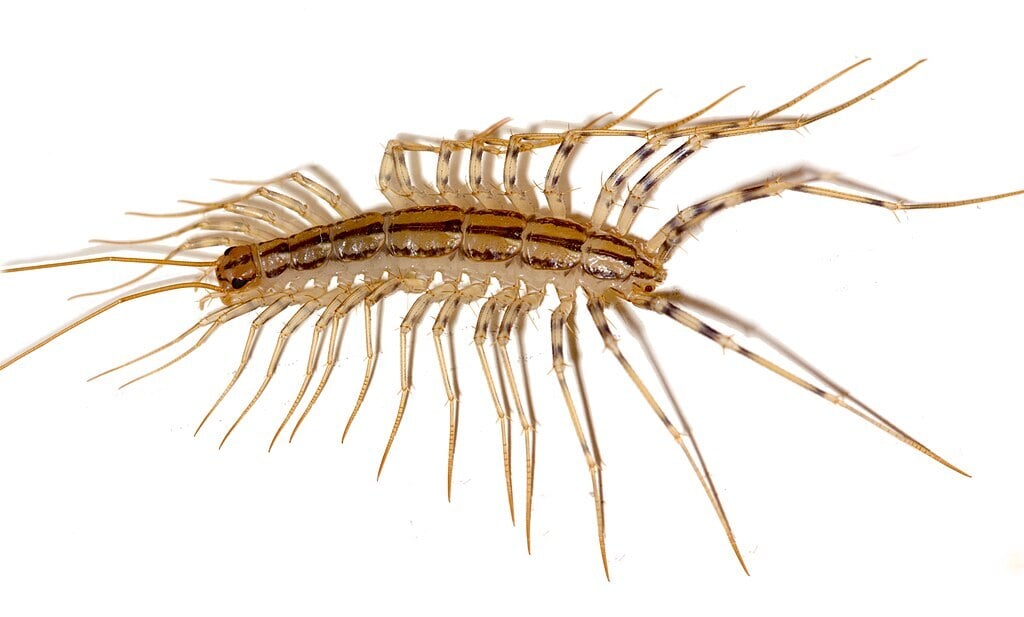
The most common types of centipede in New England include the house centipede, the brown centipede, and the eastern bark centipede. We see house centipedes most often. These pests can reach 1.5 inches in size and have 15 pairs of legs.
As you might have guessed, they are called “house centipedes” because of their propensity to hang around homes, typically in dark and damp spaces like basements.
What Does a Millipede Look Like?
A millipede has a similar appearance to a centipede - looking like a long, segmented worm.
They are typically brown or black and despite their many legs move quite slowly. When comparing millipede vs centipede, scientists have grouped them together because of their segmented bodies but they do have many distinct differences.
A key difference between a centipede and a millipede is that centipedes have one pair of legs per segment and millipedes have two. Millipedes do also resemble a worm and you may not even see their legs at first glance. Millipedes also move significantly slower.
Common types of millipedes in New England include the giant millipede, various types of “snake millipedes,” and flat-backed millipedes.
Are Centipedes or Millipedes Dangerous?
Generally speaking, neither centipedes or millipedes are dangerous to humans. Of course, there is always the chance of a person being allergic, which could be a problem.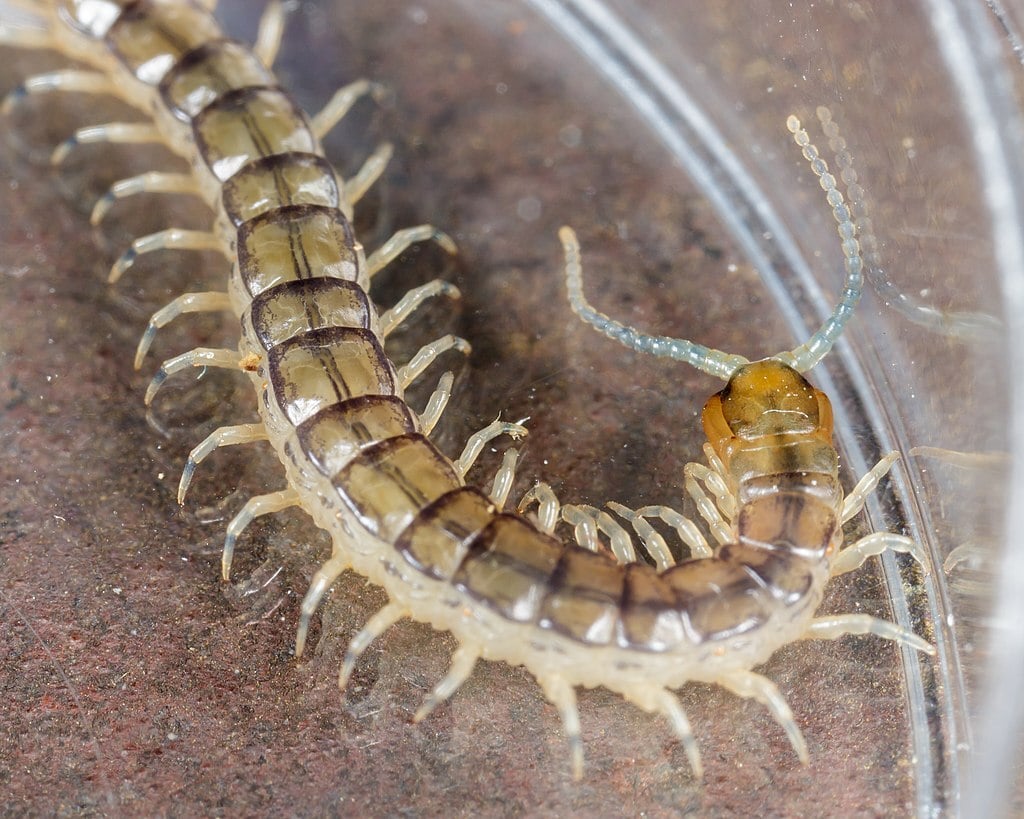
Millipedes do not bite and they are not venomous, though they can secrete a toxin when scared (which could be irritating to humans, if touched). Millipedes are known to curl up in a ball when they feel threatened.
Centipedes, on the other hand, can bite but rarely do. You’d likely have to handle a centipede to get bit by one. However, they are venomous since they use venom to kill their prey. Luckily, If bitten, a human would likely need to be allergic to the venom to have a serious reaction.
How do House Millipedes and House Centipedes Get In?
Just like other pests, millipedes and centipedes are opportunistic creatures that are always in search of food, water, and shelter. If they can find a comfortable arrangement inside of your home (away from other predators), they’ll likely happily hunker down.
Our weather can be harsh and pests are often looking for a warm place to hang out, particularly during the colder months. Your home probably seems like a dream vacation. It’s a warm, cozy shelter from the outdoor elements. Pests tend to find their way inside via cracks, openings, and even drain pipes. Sometimes they’ll also hitch a ride on packages and other items brought inside.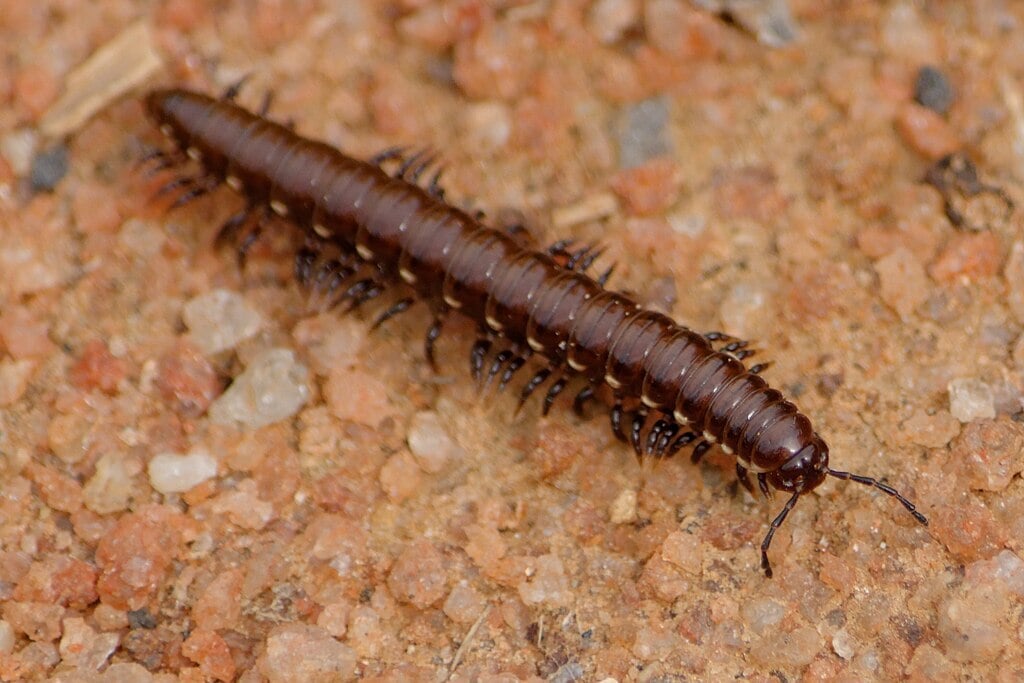
Since millipedes and centipedes tend to prefer dark, damp spots, they’re often found in basements.
Some ways to prevent house millipedes and centipedes from coming indoors include decluttering, eliminating moisture, cleaning up crumbs and other spilled food, and sealing up cracks. The idea is to make your home less “comfortable” for unwanted guests and these methods are good at preventing many types of pests.
In addition to taking these steps, you should also invest in professional pest control. This is the best way to put a “barrier” around your home and keep pests from coming inside in the first place!
A prevention strategy is always your best bet. Once pests do find a way inside, it can be difficult to get the problem under control.
Choosing Pest Control in Southern NH, Southern Maine, and Northeastern MA
At Seacoast Turf Care, serving New Hampshire, Massachusetts, and Maine, our pest control services not only cover house centipedes and millipedes but most of the common household pests. It also covers mice!
With effective, quarterly treatments, you can keep many pests out of your home. This is important as sometimes a simple bug problem can become a full-blown infestation if given the chance. Certain pests, like German Cockroaches (as an example), can breed quickly and your problem can multiply.
If you truly want peace of mind that you’re keeping pests away, investing in professional pest control is a wise choice. By taking the right steps, you’ll be able to get back to enjoying life as usual.
Want to learn more about how pest control services can protect your family and give you peace of mind? At Seacoast Turf Care, we service MA, ME, and NH towns near Stratham, North Hampton, Exeter and many more. Get pest control pricing for your Southern NH, Southern Maine, or Northeastern Massachusetts property.

Image Sources: house centipede, snake millipede, eastern bark millipede, millipede
Ready to get the lawn you've been wishing for?
