

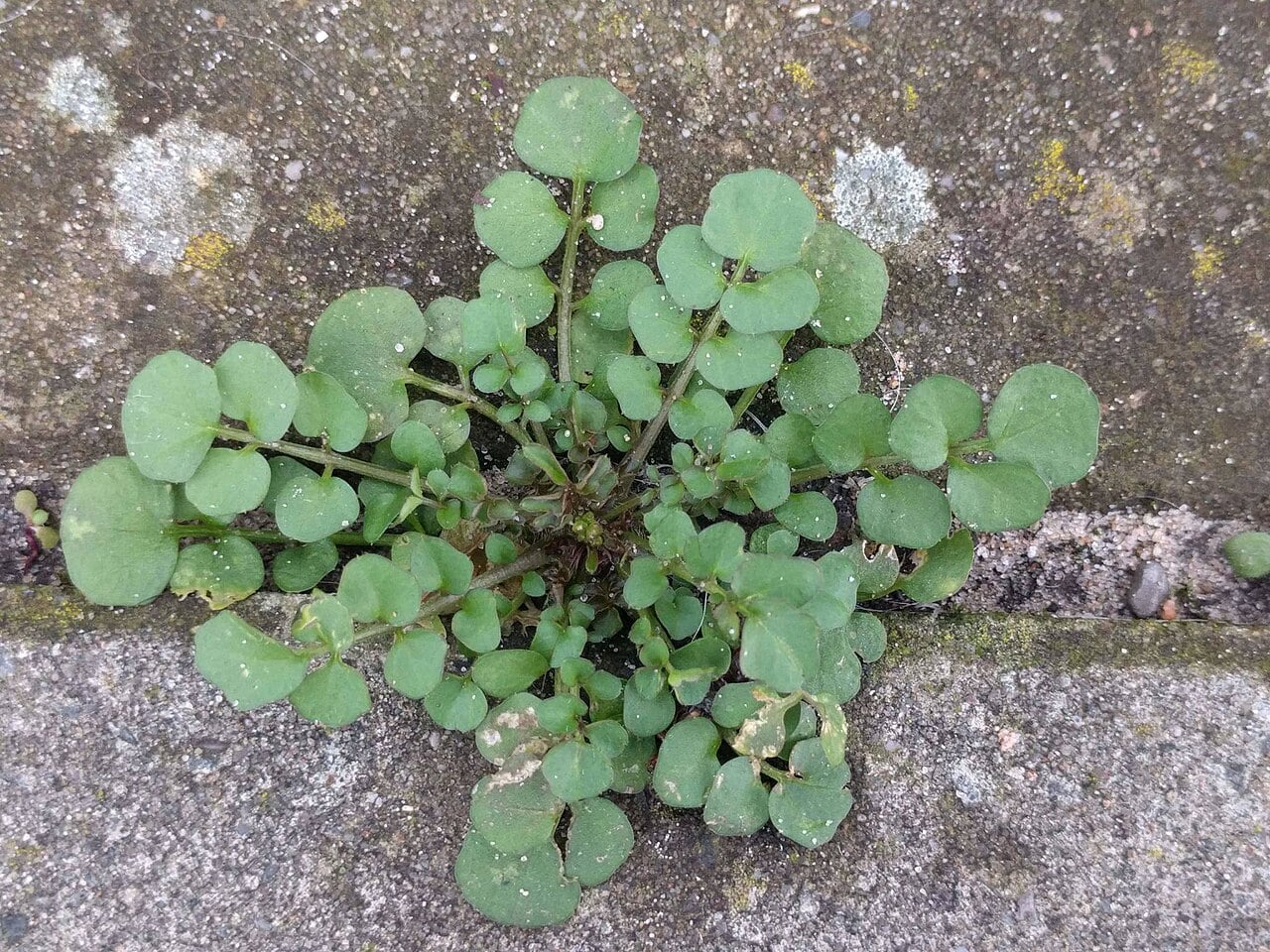
Among the many different weeds found in the Seacoast region, hairy bittercress is actually easy to overlook but can become very problematic over time. It is small, but fast-spreading, and it can quickly become an unwelcome presence in your well-maintained lawn.
In this article, we’ll dive into how to deal with lawn bittercress, so that you can get back to enjoying your yard to the fullest.
Jump To:
What is Hairy Bittercress?
Why is Hairy Bittercress Growing in Your New England Lawn?
How Does Hairy Bittercress Spread?
How to Get Rid of Hairy Bittercress in Your Lawn
When to Consider a Professional Weed Control Program
FAQs on Hairy Bittercress
Choosing Lawn Weed Control in Southern NH, Northeastern MA, and Southern ME
What is Hairy Bittercress?
Cardamine hirsuta, commonly known as hairy bittercress, is a small winter annual weed belonging to the mustard family. People find this weed particularly frustrating due to its explosive seed pods that have been described like “spring-loaded traps.” Even the slightest brush against them and they scatter seeds as far as 16 feet away!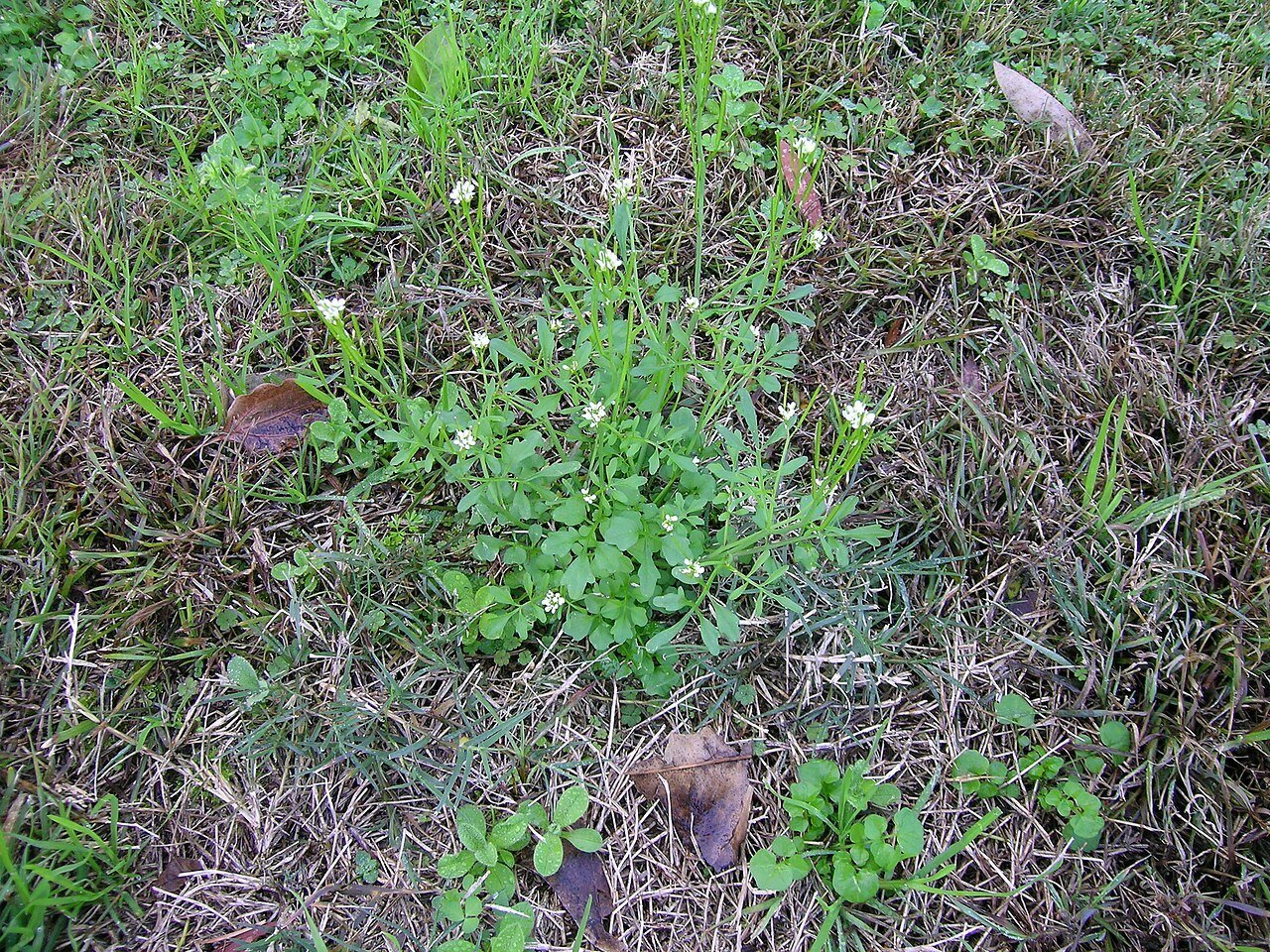
A single plant can produce thousands of seeds. That means just one weed can turn into many unwanted patches by next season.
There are 15 distinct kinds of bittercress weed growing in New England. Hairy bittercress is considered the most common and abundant. It gets its name from the tiny microscopic “hairs” found on its lower leaves and stems. These hairs are sparse and tiny so you probably won’t see them unless under a microscope.
This weed is also distinguished by its rosette shape and tiny white flowers in early spring.
Why is Hairy Bittercress Growing in Your New England Lawn?
Hairy bittercress thrives in moist or damp soil, so if you have areas of the lawn that hold water and don’t drain well, you might see this weed pop up there. The tiny seeds do require good access to sunlight to start their growth, so it also tends to fill in bare spots or thin areas.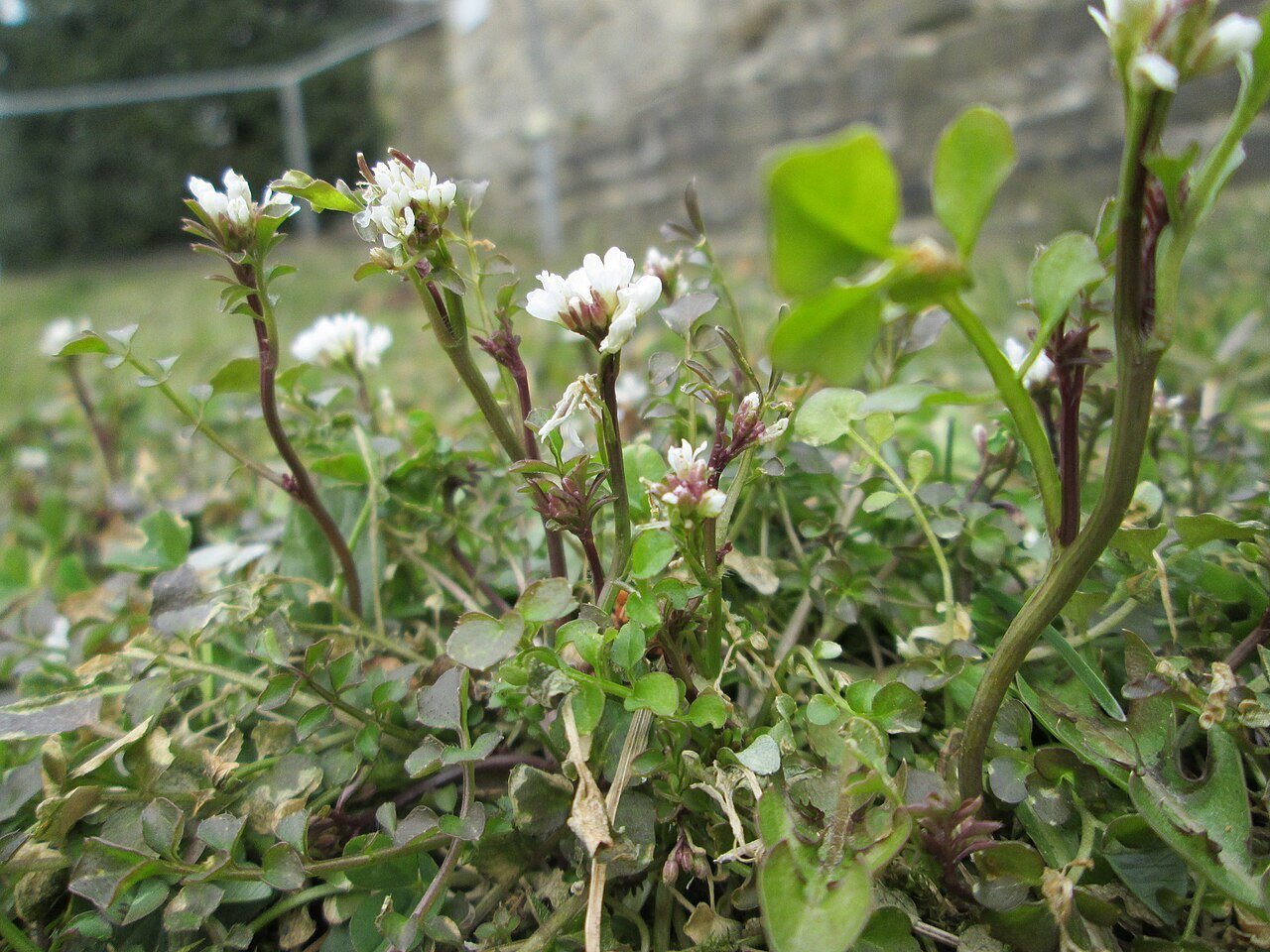
As a winter annual weed, hairy bittercress seeds sprout in the fall and winter months and can actually grow quite rapidly during chilly days in the early spring when the rest of the lawn is still dormant.
How Does Hairy Bittercress Spread?
You might be wondering: How did hairy bittercress end up here in the first place?
Like other weeds that are spread by seed, it could have traveled to your yard via animal or bird dispersion. It could have also come from a neighboring yard. Since the seed pods can distribute seeds up to 16 feet away, they can explode over property lines.
Water can also help move seeds. Rain or irrigation can cause seeds to travel across mulch, soil, and hardscape surfaces, to new areas of the lawn.
Hairy bittercress has a relatively short life cycle which means it will produce several generations in a single growing season under the right conditions. This weed is mostly a problem because of how quickly it can spread.
How to Get Rid of Hairy Bittercress in Your Lawn
The good news is hairy bittercress control is generally considered pretty straightforward, especially when caught early. Because it is a broadleaf weed, it can be handled with broadleaf weed control.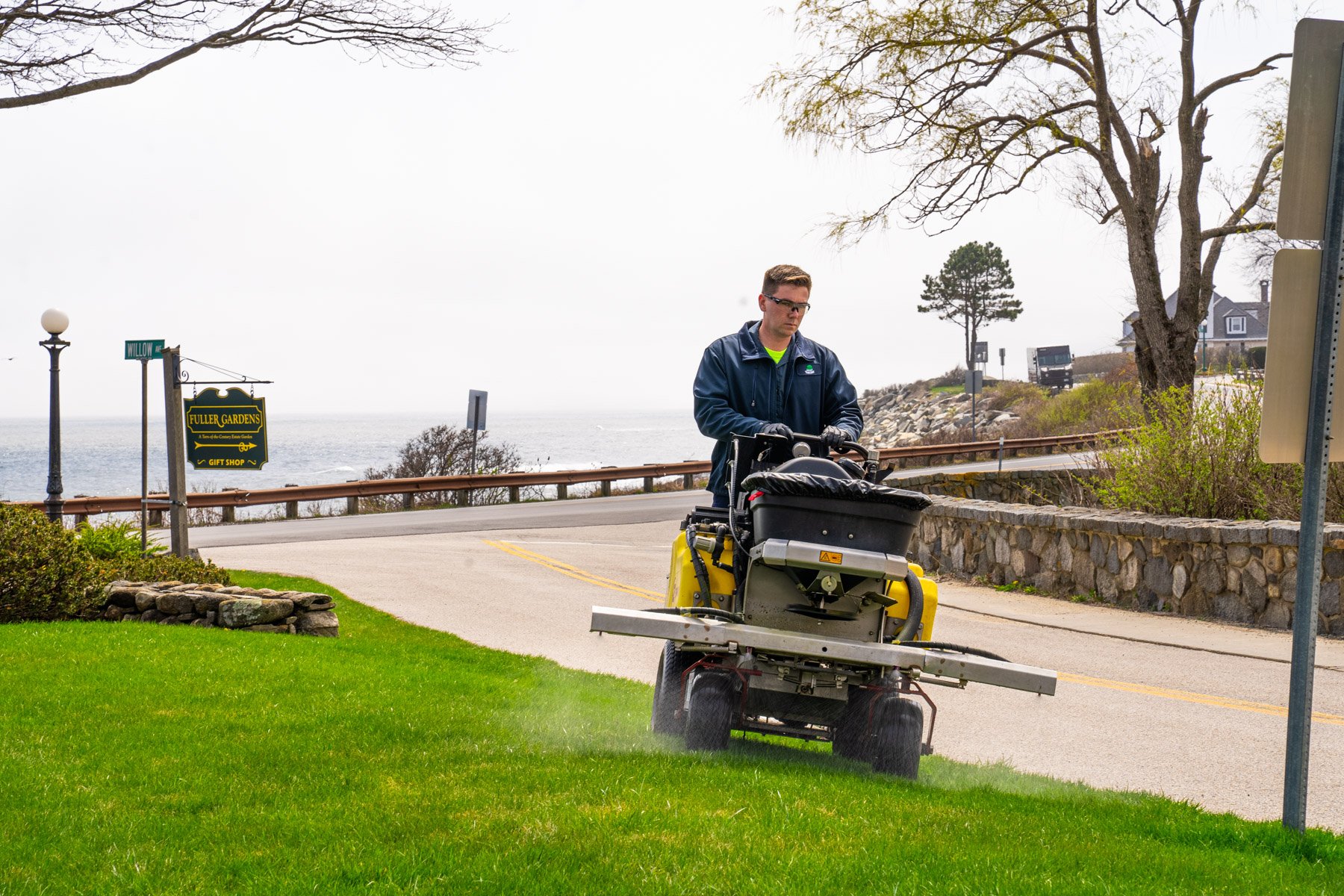
It is definitely helpful to catch this weed early, as young plants are easier to control than mature plants with seed pods.
Can You Pull Hairy Bittercress by Hand?
Pulling hairy bittercress by hand can be tricky if you don’t get the timing right. While it’s safe to pull young plants, once the weed has developed its explosive seed pods, you could risk spreading those seeds when pulling the weed.
If the plant already has mature seed pods, it is best to leave it undisturbed in the lawn. Broadleaf weed control can tackle the existing weed, but keep in mind it’s not going to undo the seeds that have already been dispersed. This is why repeated controls over time are often necessary.
Going forward, it’s always helpful to keep a watchful eye on your property as addressing these plants early on, before they can spread seeds, will play a valuable role in hairy bittercress control on your property.
When to Consider a Professional Weed Control Program
If you’re serious about getting rid of weeds like hairy bittercress, it always makes sense to invest in professional weed control. After all, this weed is just one of many that plague New England lawns.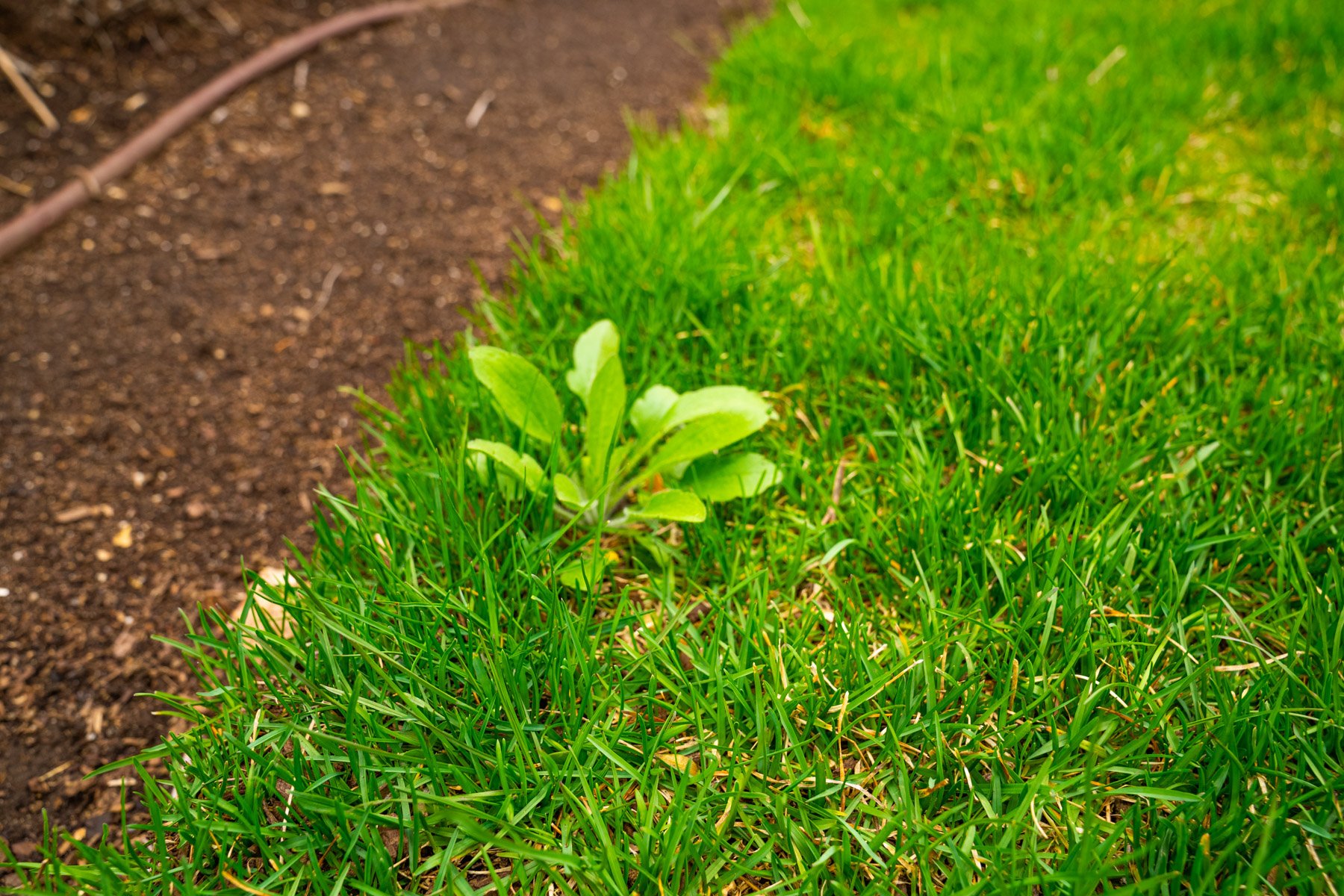
An effective weed control program is one that is varied with different products for different weeds (as well as for different times of the year). It helps to have a good understanding of what types of lawn weeds pose a problem here in New England and making sure that your program covers them.
The best weed control strategy also emphasizes good lawn care habits. That’s because the best way to defend your lawn from weeds is to have a thick and healthy turf that makes it challenging for them to grow. Tasks like proper mowing, fertilization, and annual lawn aeration will all play a role in promoting a healthy turf that naturally starts to choke out weeds.
FAQs on Hairy Bittercress
Is hairy bittercress edible?
Surprisingly, yes, hairy bittercress (or Cardamine hirsuta) is considered edible and is actually sometimes used as a peppery salad green. Although you could eat hairy bittercress that was grown for this purpose, we would never recommend eating it directly from your yard. Animal waste (from pets or wild animals) and potential lawn treatments would make it unsafe to consume directly from your yard.
Is hairy bittercress harmful to grass?
Like any weed, hairy bittercress is going to be competing with your healthy turf for things like water, nutrients, sunlight, and growing space. As it grows, it can start to choke out healthy turf.
Can mowing spread hairy bittercress seeds?
Yes, mowing can spread hairy bittercress but only if the weed has already developed mature seed pods. Mowers can disturb the plant and cause the seed pods to explode. After seeds have already been dispersed, mowers will not interrupt them, but they can remain in the soil and germinate later.
Is hairy bittercress the same as watercress?
No, these are two entirely different plants. Watercress is actually an aquatic plant that grows near or even in moving water. It is commonly used as a food.
Will hairy bittercress die in the summer?
Yes, usually hairy bittercress will decline or die in the hot, dry summer conditions as it needs moisture to thrive. However, we do tend to have rainy summers. It’s possible that hairy bittercress will persist, particularly in shady or damp spots. The seeds will also remain, even when the visible plants die. They will then germinate when favorable conditions return.
Choosing Lawn Weed Control in Southern NH, Northeastern MA, and Southern ME
Dealing with weeds like hairy bittercress can be complicated and more than you might want to tackle on your own.
This is why many people turn to professional lawn care services, including professional lawn weed control.
At the end of the day, your lawn care success boils down to working with a company that will perform the right services at the right time. One of the biggest benefits of partnering with a professional is that you don’t really have to worry about all of this yourself.
At Seacoast Turf Care, we take New England weed control seriously. We provide lawn care services in Southern NH, Southern Maine, and Northeastern Massachusetts that help to promote healthy lawns without weeds.
The end result should be the best possible lawn that you can truly enjoy to the fullest.
Want to learn more about what makes us a great choice for your lawn care needs? At Seacoast Turf Care, we service NH towns near Stratham, North Hampton, Exeter, and many more. Get lawn care pricing for your Southern NH, Southern Maine, or Northeastern Massachusetts property.
Image Sources: hairy bittercress in concrete, hairy bittercress in grass, hairy bittercress flowers
Ready to get the lawn you've been wishing for?