

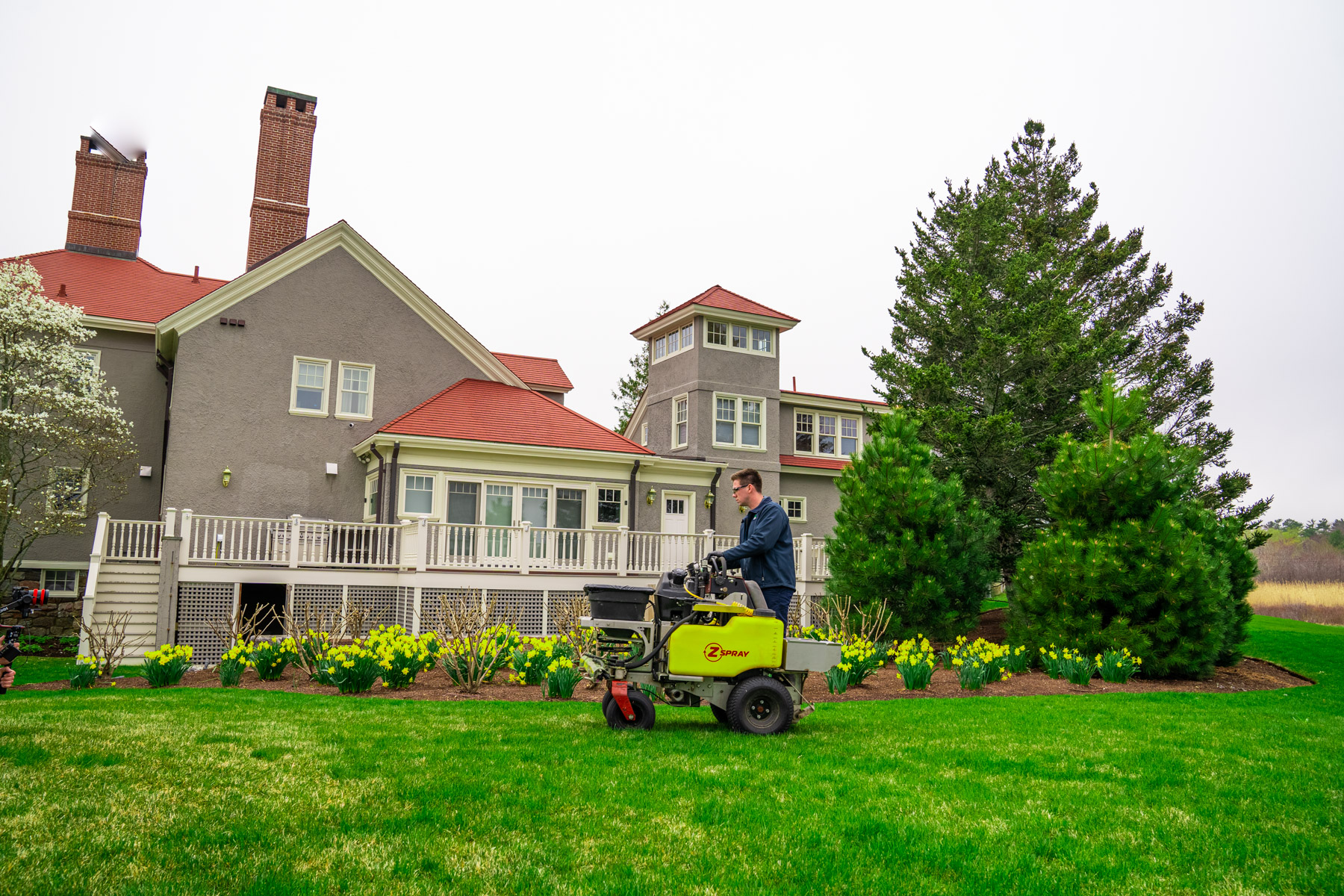
Whether you’ve already hired a lawn care professional or it’s something that you’re seriously considering, you might be looking for details on what to expect for that first visit. If you’ve never had general lawn maintenance performed by a pro before, you may have no idea what’s involved.
We’re here to help! We know that the better informed people feel, the more comfortable they are with their decisions.
In this article, we’ll provide lawn care advice that will help set you up for success.
Jump to:
What Happens During Your First Lawn Care Visit?
How to Prepare for Your Visit
What to Expect After Treatment
How to Maximize Your Results
FAQs About Lawn Care
Choosing Lawn Care in Southern NH, Northeastern Massachusetts, and Southern Maine
What Happens During Your First Lawn Care Visit?
During your first lawn care visit, you can expect a lawn care professional to arrive at your property and inspect the current conditions. You should know about the window when they’re coming as most lawn care companies will send advanced notification.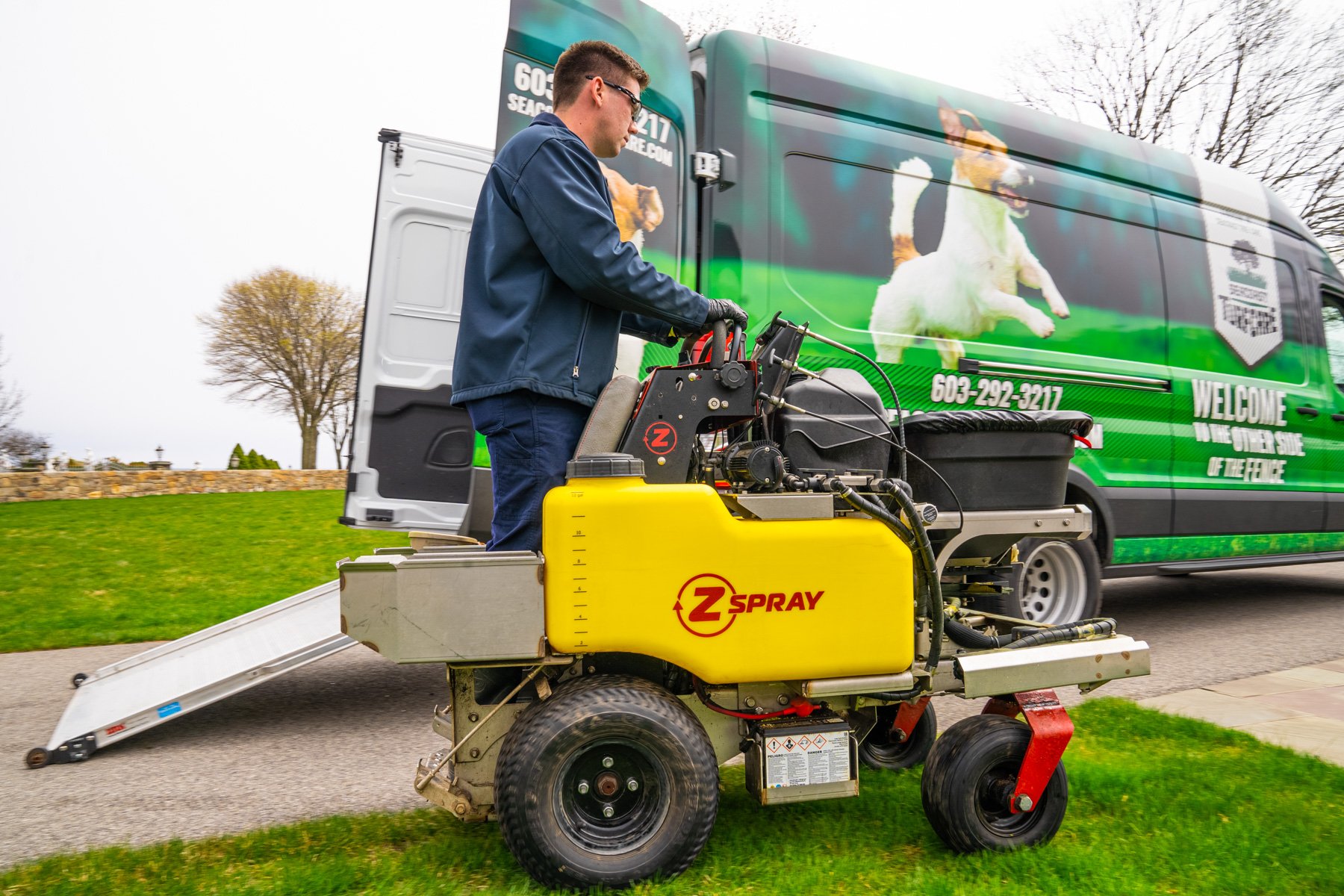
At Seacoast Turf Care, we send two pre-notifications, communicating both 48 hours and 24 hours ahead of time about our arrival window.
You do not have to be home when your lawn care company comes to treat your lawn for the first time. However, if you have a locked gate, that should be open so that your lawn care professional can perform the treatments on your lawn.
How to Prepare for Your Visit
A few simple things can help you prepare for your first lawn care visit.
For one, it is helpful to have dog toys or kid’s toys picked up and moved off of the grass.
As we mentioned, you’ll also want to make sure that any locked gates are opened so that your lawn care professional can get in. You do not need to be home for a lawn care treatment but your lawn care technician will obviously need to access your lawn.
Coming out of the winter months, if you used sand for ice traction on your driveway or walkways, and a lot of that blew into the yard, it’s definitely helpful to rake that up as best as possible and remove it. You just want to ensure the treatments being applied are able to make it into the soil and are not getting caught up in sand.
The same goes for leaves. If you did not get around to one more leaf cleanup prior to the first snowfall, you may still have leaves on your property after everything melts off. Raking those up ahead of your first lawn care treatment will ensure that all of the products being applied are getting where they need to go. This also applies to branches or other debris that ended up in your yard over the winter.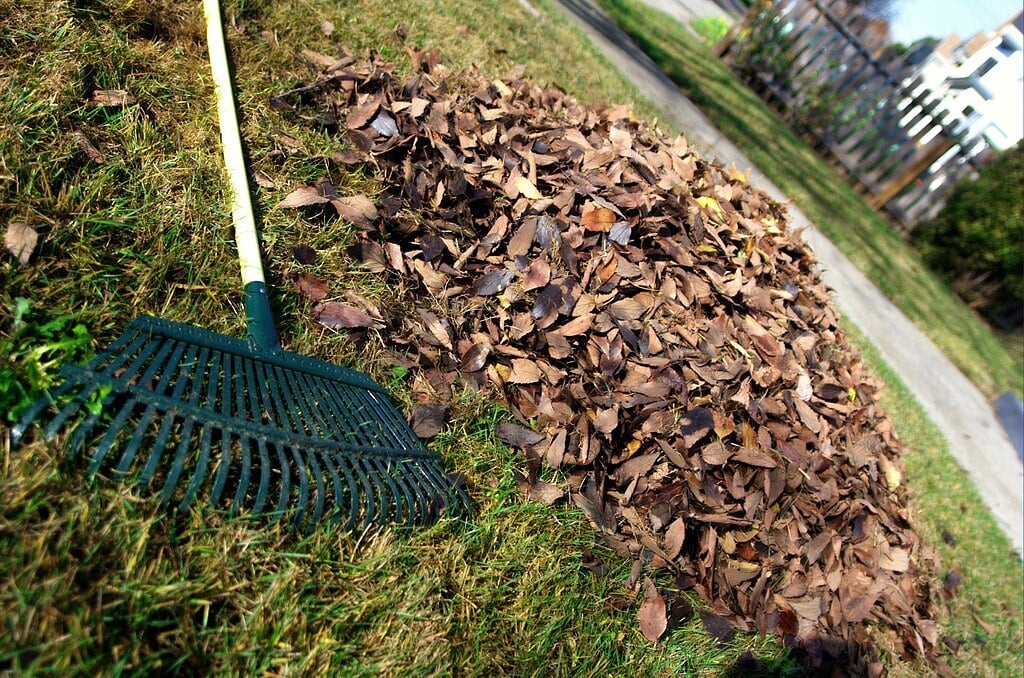
These simple steps will make sure that you’re getting the most out of lawn care treatments.
What to Expect After Treatment
While everyone wishes lawn care treatments would work overnight, the truth is, you’ll have to trust the process. You will start to see results over time.
During warmer months, you may notice broadleaf weeds die off not too long after the application is applied. But weeds need to be actively growing to see these visible results. A lot of what’s taking place is happening beneath the surface, at the soil level.
In time, you’ll eventually see thicker, greener grass. And you’ll have a healthier lawn that will be more resistant to problems.
How to Maximize Your Results
Getting the most out of your lawn care services does mean some general lawn upkeep of your own between visits.
Even if you’ve hired a lawn care professional to handle services like fertilization and weed control, you’ll still need to take care of vital tasks like mowing and watering the lawn. How these tasks are performed can actually have an impact on your lawn care results.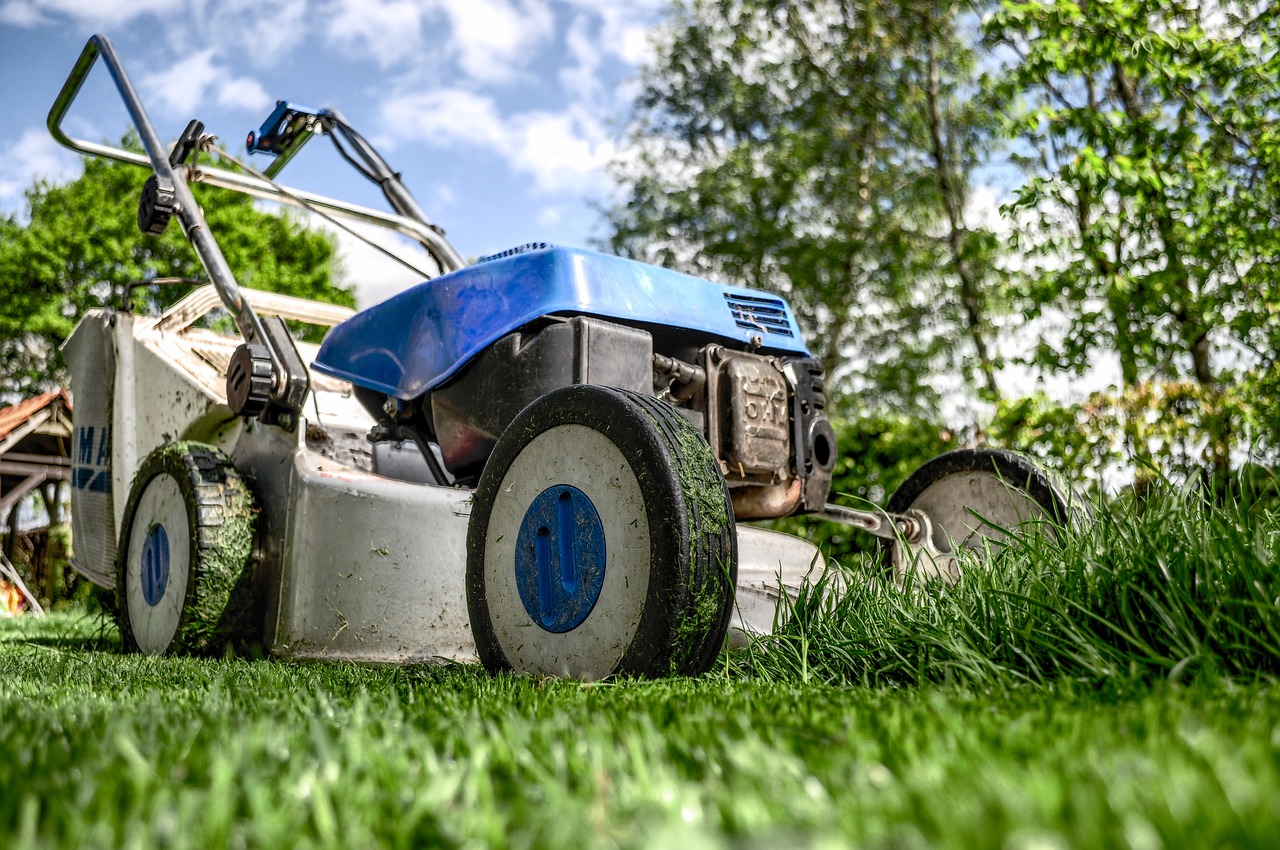
Knowing how to care for your lawn will help with your overall success. Here is some lawn care advice to follow on watering and mowing.
Proper watering
Water is going to be essential to the success of your lawn and any lawn care services you’re having done. But sometimes proper watering is a task that gets overlooked.
Homeowners sometimes mistakenly assume that rainfall is handling all of their watering needs. But established lawns typically require around one to two inches of water per week. In the springtime when it is rainy, Mother Nature might be supplying that. However, during periods of drought, you may need to step up your watering efforts.
Aim for a deep soak when watering the lawn as this will help water reach the root zone where it’s needed most.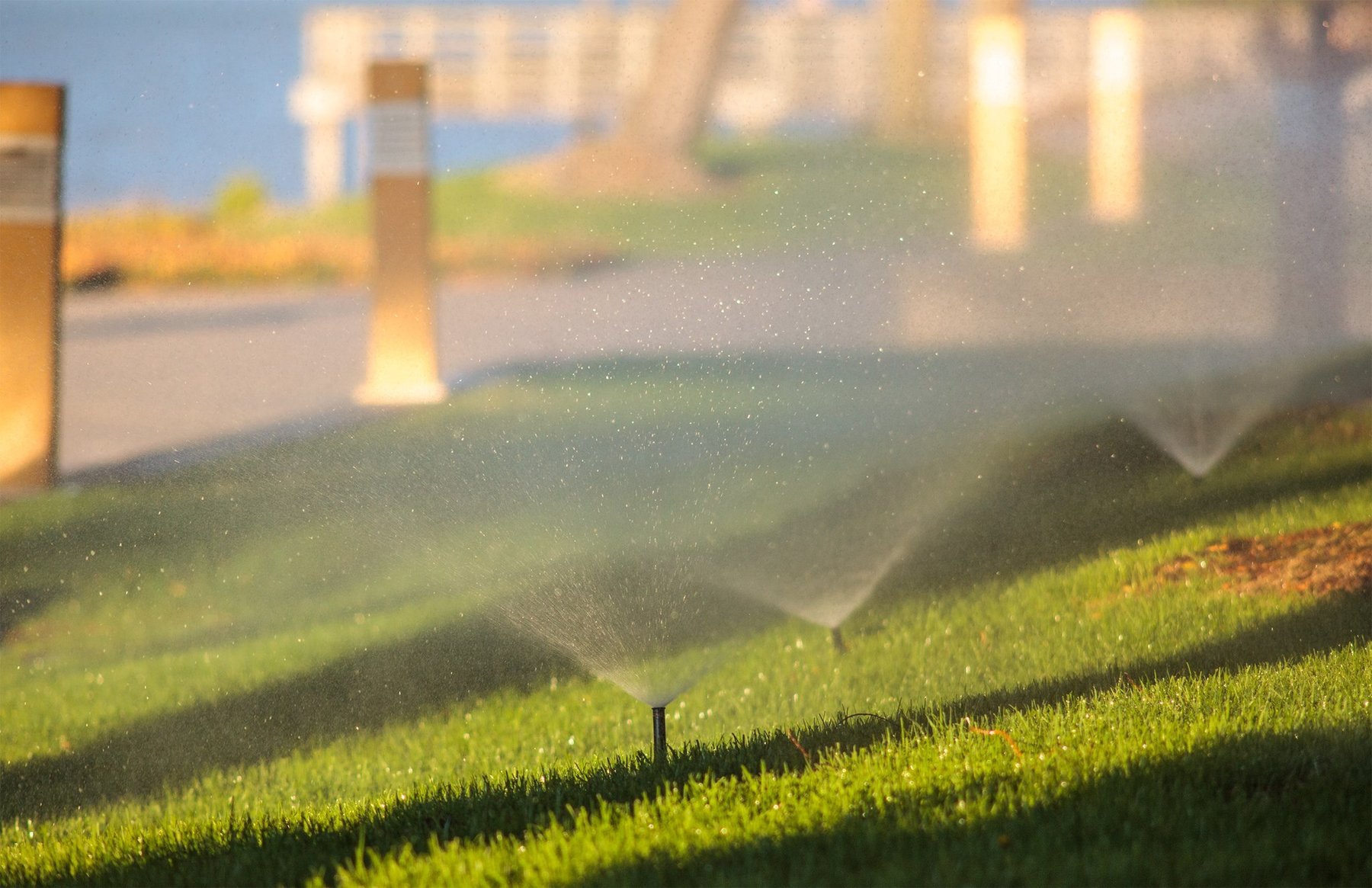
In addition, avoid watering the lawn late in the day or at night as this can make your lawn more prone to disease due to fungal growth. Instead, water your lawn in the early morning. This will give plenty of time for the water to reach the lawn’s roots before evaporating (as can happen in the heat of the day).
Proper mowing
Mowing is another vital aspect of lawn care in New England. While mowing isn’t rocket science, people tend to overlook the importance of doing it right.
A common mistake is mowing the lawn too short. The exact cut height depends on the grass type that you have growing. For instance, Rye Grass should typically be maintained at 1.5 to 2.5 inches.
When you mow grass too short, you put excessive stress on it. This can cause the grass to turn yellow.
Also, be sure to keep up with mowing frequency. It’s better to mow more often, making less intensive cuts than it is to go weeks between mowing and then have to make drastic cuts.
It’s also a good practice to mow with a level mowing deck and a sharp blade. A dull blade can “rip” the grass instead of cutting it cleanly.
It’s not uncommon for homeowners to think that a yellowing lawn is the result of a mistake that a lawn care professional made (such as a fertilization error) when in fact, it’s a mowing or watering issue. Both improper mowing and watering can really impact the health of your lawn and your lawn care technician should be able to advise you on a solution.
FAQs About Lawn Care
Before we wrap up this article, we wanted to answer some remaining FAQs that we often receive regarding lawn care. Hopefully, this lawn care advice has helped prepare you for your first visit. If you have remaining questions, we are always here to help.
Should I mow my lawn before the first treatment?
During the first treatment, your lawn is probably not actively growing yet. Lawn care starts in the very early spring but most New England homeowners do not need to mow until the weather starts to consistently stay warm.
As we do get into the warmer months, it will be important that you keep up with mowing. If the grass is ignored for weeks and is very long, we cannot come out and apply lawn care products. These treatments will be ineffective as they will get caught up in the grass instead of reaching the soil level, where they’re needed to work.
How long should I wait before letting kids and pets back onto the lawn?
Most of our treatments are granular, and there is no wait time for these. However, if we’re doing any sort of liquid application (like spot treating weeds), then we generally recommend waiting one to two hours. The product just needs to fully dry.
When will I see results from my first lawn care treatment?
You’ll have to trust the process, as a great lawn does not happen overnight. You will not see results after the first lawn care treatment, as these treatments do build on one another and take time.
Also, as we’ve mentioned, the work is being done at the subsurface level, so it’s not going to be visible. But over time, you should start to notice fewer weeds and thicker, healthier lawn.
Do I need to water my lawn after my first treatment?
No, you do not need to water the lawn after the first treatment. In the early spring, coming out of winter, there is plenty of moisture. Watering right after we treat can also wash some of our liquid products off, which you don’t want to do.
What to do about snow piles?
As much of the snow melts off, homeowners commonly ask us about lingering snow piles. We do try to wait on those first applications as long as we can, allowing as much snow to melt as possible. You can also help out by breaking down some of those big snow piles, helping them to melt quicker.
For the most part, snow piles tend to be on the corners of properties, allowing us to still treat the majority of the yard.
Choosing Lawn Care in Southern NH, Northeastern MA, and Southern ME
Properly caring for your lawn will result in many benefits. With proper New England Lawn Care, tailored to our region, you’ll start seeing a thicker, greener, and healthier lawn.
If you haven’t hired a lawn care pro yet, we’d love for you to consider Seacoast Turf Care as your lawn care provider.
At Seacoast Turf, we’re not only looking to deliver the lawn care results you’re after, but we’re also looking to help make life less stressful for you. We provide lawn services in the seacoast region of New Hampshire, Maine, and Northeastern Massachusetts.
We’re also always available to answer questions.
Hopefully this lawn care advice has given you some of the information you were seeking, but if you still have questions, don’t hesitate to get in touch.
Want to learn more about what makes us a great choice for your lawn care needs? At Seacoast Turf Care, we service NH towns near Stratham, North Hampton, Exeter and many more. Get lawn care pricing for your Southern NH, Southern Maine, or Northeastern Massachusetts property.
Image Sources: raked leaves, sprinklers, lawn mower
Ready to get the lawn you've been wishing for?
