


Do you feel like your home is constantly dealing with pest problems? It’s true that some homes do naturally attract more pests than others for reasons like location, age, environmental and landscape conditions, and also the use (or lack) of pest prevention strategies.
In this article, we’ll cover some of the common reasons why some New England homes have more pest problems than others. We’ll discuss the various factors that come into play and what you can do about it.
We believe you shouldn’t have to worry about pests when trying to enjoy time at your home.
Jump to:
Common Reasons for Pest Problems
Differences in Pest Pressure By Region
How Do Bugs Get in Your House?
FAQs About Pest Problems
When is Professional Pest Control in Southern NH, Northeastern MA, and Southern ME Necessary?
Common Reasons for Pest Problems
Do you feel like you have more house bugs than you ought to? While it’s true that every home likely has pests lurking, some homes are more prone to pest activity than others.
Why is that?
There are several probable reasons.
Location
The location of the home can significantly impact pest activity. As you might imagine, some areas simply have more pest activity than others. Typically, if you live in a wooded area, you’re naturally going to have more pests as this is a common habitat for rodents and bugs.
Your home’s proximity to water can also make a tremendous difference. Many moisture-loving pests are going to be found around bodies of water. That’s not limited to just lakes or marshes. Even retention ponds or low-lying areas that collect standing water can impact pest activity.
Environmental and Landscape Conditions
The local conditions like moisture and drainage issues, surrounding landscaping, shade levels, and more, can all contribute to pest activity. Some of these conditions are within your control (like clogged gutters or overgrowth) and others are not (like the surrounding environment, such as woodlands or marshlands).
Age
The age of your home can also impact the number of house bugs you have. Older homes do tend to have more pest problems for a variety of potential reasons.
For one, older homes tend to have more entry points like settling cracks in foundations, gaps around windows and doors, and aging siding. Older homes are also more prone to having aging materials. Wood rot and deteriorating roofing can attract pests and make it easier for them to come inside.
Finally, aging homes also tend to have mature landscaping like dense shrubs and full plant beds. These can become habitats for pest activity.
Pest Prevention
Pest prevention strategies that are already in place will also play a role in how many house bugs (or other pests like rodents) wind up in your home. Since pests make their way inside from the outdoors, strategies that keep pests out will obviously impact the level of pest activity.
Homes that are well-sealed up should have fewer pests than those that aren’t. Similarly, homeowners who maintain a tidy landscape and reduce areas of standing water, should also have more success at keeping pests out.
But as we’ve mentioned, there are always going to be factors that are outside of your control. And even with the best prevention efforts, sneaky pests may still make their way inside. This is why house insect control is still going to be your best preventative course of action. Investing in pest control services is like putting a barrier of protection around your home.
Differences in Pest Pressure By Region
As we’ve mentioned, location can play a huge role in pest activity. Here in New England, we have relatively vast differences in climate based on regional locations. Inland Massachusetts vs. Coastal New Hampshire (the Seacoast Region), can be quite different.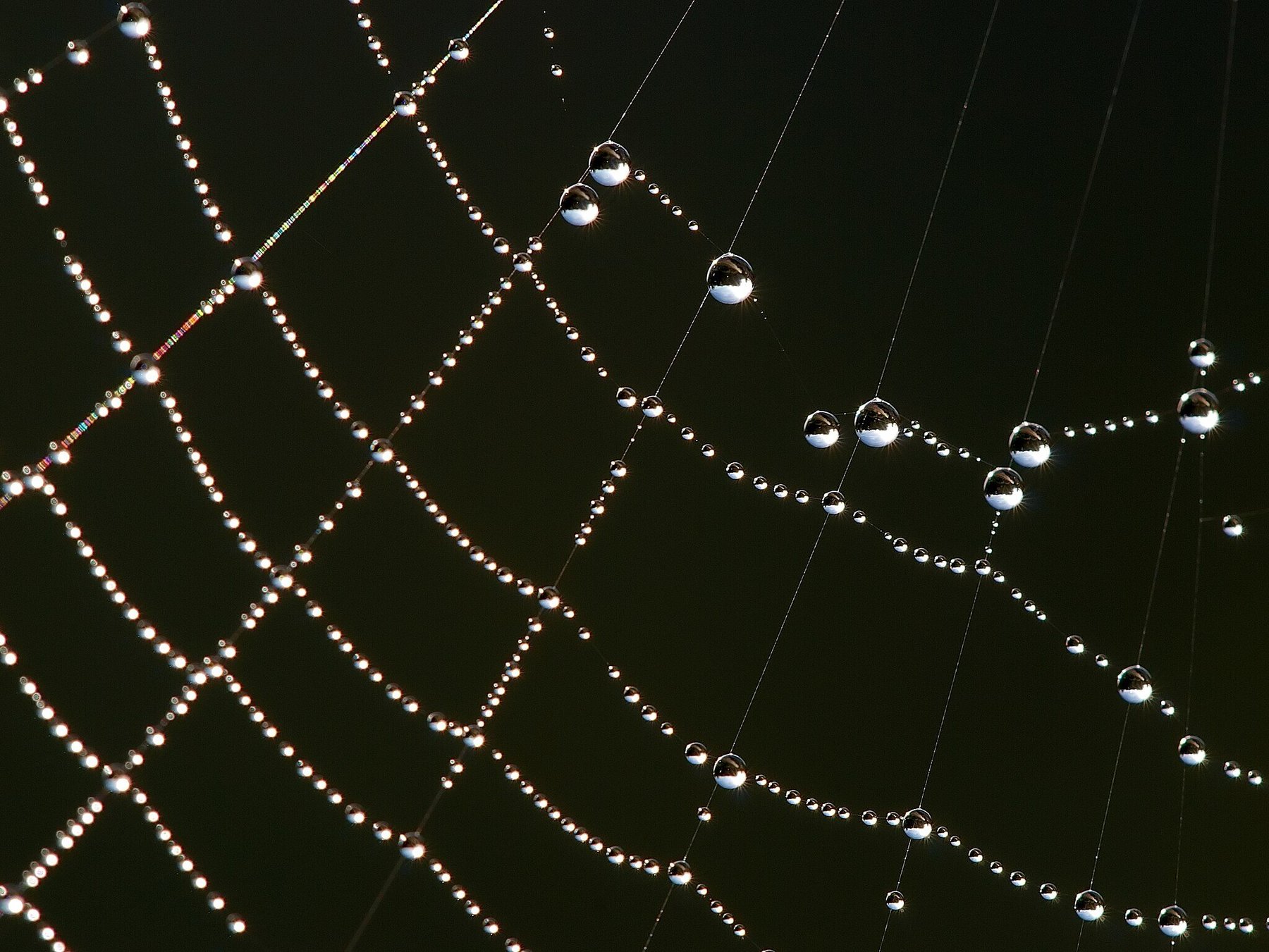
Because the Seacoast Region usually experiences higher humidity and milder winters, pest problems tend to be more rampant. These are favorable conditions for moisture-loving pests like spiders and ants.
While the salt air does discourage some pests, it also increases corrosion of outdoor structures which can lead to rotting wood and pest activity. So, it’s a bit of a catch-22 situation.
Inland Massachusetts, on the other hand, has hotter summers and colder winters, making pest activity a bit more seasonal in nature.
There is generally less outdoor pest activity in winter BUT New England’s harsh winters can increase the chances of pests trying to make their way inside. Unfortunately, there is often an influx of indoor pest problems in the winter due to pests trying to escape the cold.
Some of the creatures that often try to become winter house pests include:
-
Spiders: Arachnids are a common winter pest. That’s because they might be attracted to your home by other bugs that have come there to overwinter (since spiders feast on bugs). One common place where spiders tend to build their webs is around lights (which draw in a lot of flying pests that they want to capture in their webs).
-
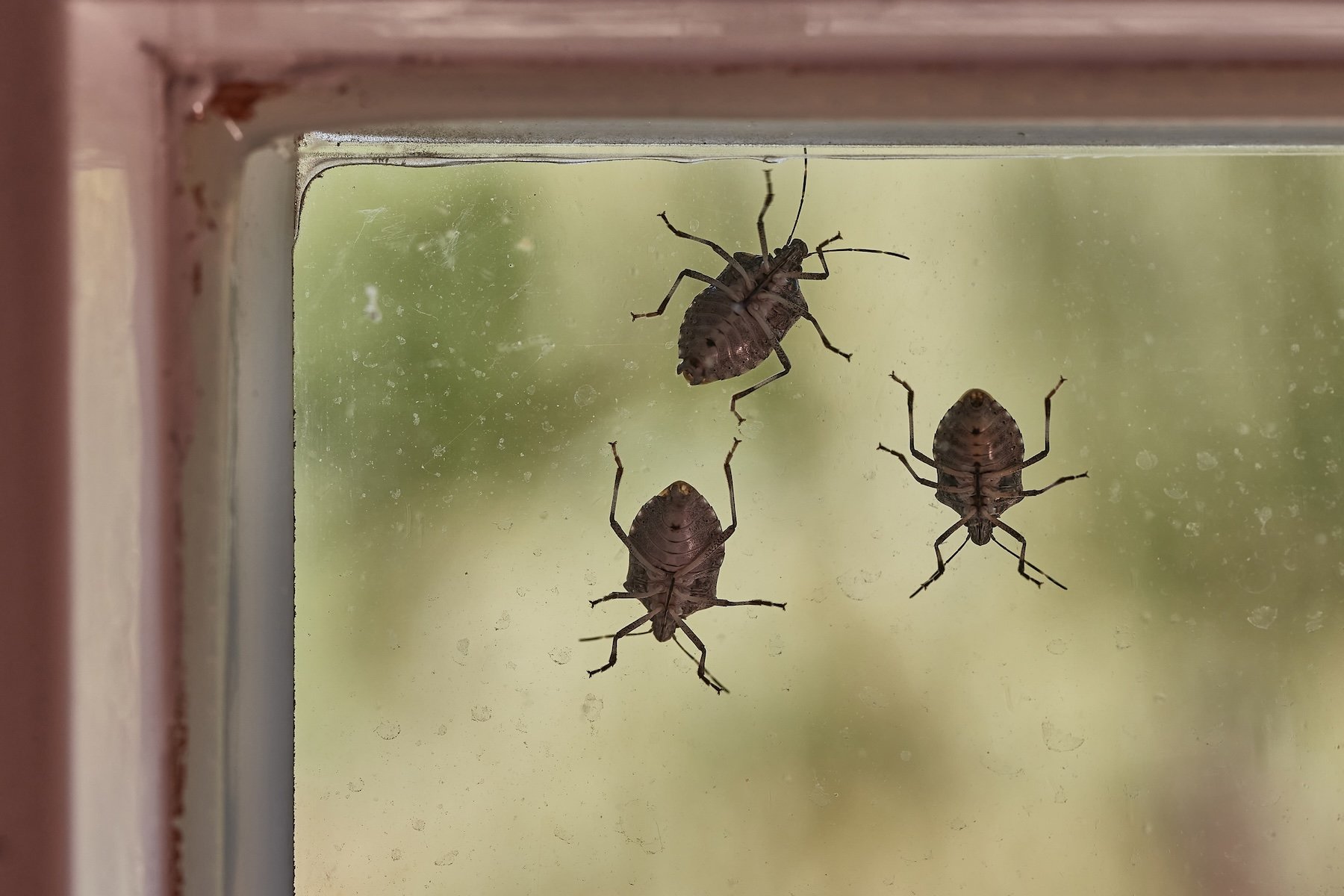
Stink Bugs: These pests commonly love to overwinter in a warm and cozy spot. Overwintering pests are those that can be found outside during the fall, but relocate inside via cracks and crevices around the foundation of your home for the cold months.
-
Cockroaches: Cockroaches can survive in a myriad of conditions, but they certainly prefer the warmth and comfort of your home to the outdoors. Typically, in the winter, roaches make their way inside in search of more sources of food. Crumbs in your kitchen might be just what they need. The trouble is, once inside, they will breed and multiply, potentially leading to an infestation.
-
Mice: Mice become active in the winter, in search of food and shelter. Because mice tend to be most active at night (coming out of their hiding spots in search of food), it’s quite common for homeowners to notice red flags like sounds of scratching or a bad smell before ever seeing a mouse.
How Do Bugs Get in Your House?
Why do pests come inside in the first place? Well, for a lot of the reasons you love your cozy home! Our weather can be harsh and pests are often looking for a warm place to hang out, particularly during the colder months. Your house probably seems like a dream vacation to house bugs.
Plus, your pantry can be a treasure trove of sustenance for these pests.
Understanding how pests become “house bugs” in the first place is an important step in taking action to keep them out.
Here are how bugs tend to wind up inside:
-
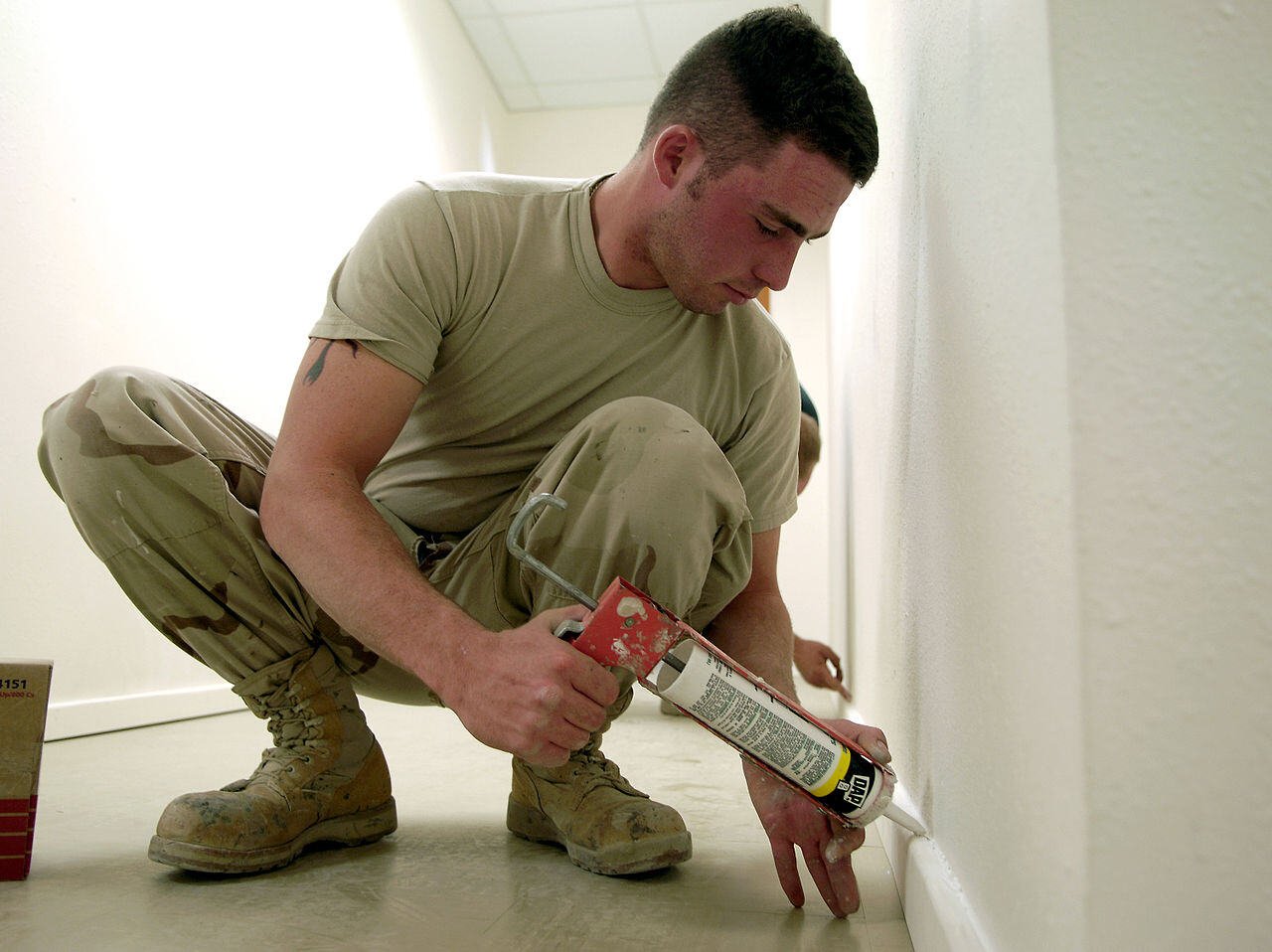
Cracks and other unsealed entry points: Unsealed cracks, gaps in the foundation, gaps around doors and windows, and torn screens are some of the common entry points for unwanted pests.
-
Moisture and humidity: Pests are attracted to damp environments, particularly in New England basements and bathrooms. Leaky pipes, clogged gutters with standing water, and humid areas provide ideal conditions for house bugs.
-
Hitchhiking: Some pests “catch a ride” on packages or other outdoor items that are brought inside. It always makes sense to inspect items before bringing them into the house. Cockroaches and silverfish, in particular, tend to love damp cardboard and hang out on boxes and packages.
-
Landscaping debris: Your landscape is likely the habitat for many pests. But the more overgrown and unkempt a landscape is, the more likely it is to harbor a wide variety of bugs. Keeping your property well-maintained does play an important role in decreasing pest activity on and around your property.
FAQs About Pest Problems
In case you have not gotten the answer that you’re looking for yet, here are some of the most common questions we get about pest problems in New England.
My house is kept clean. Why do I keep seeing bugs inside?
It is a myth that pests only enter “messy homes.” While it’s true that clutter in areas like your basement give pests a hiding spot (and decluttering can play a part in helping discourage pests), pests are pretty good at hiding and don’t need a mess to stick around. The warmth of your home is enough to bring pests indoors, particularly during the winter. And since pests will forage on the tiniest of crumbs, even the tidiest homes can have issues with bugs.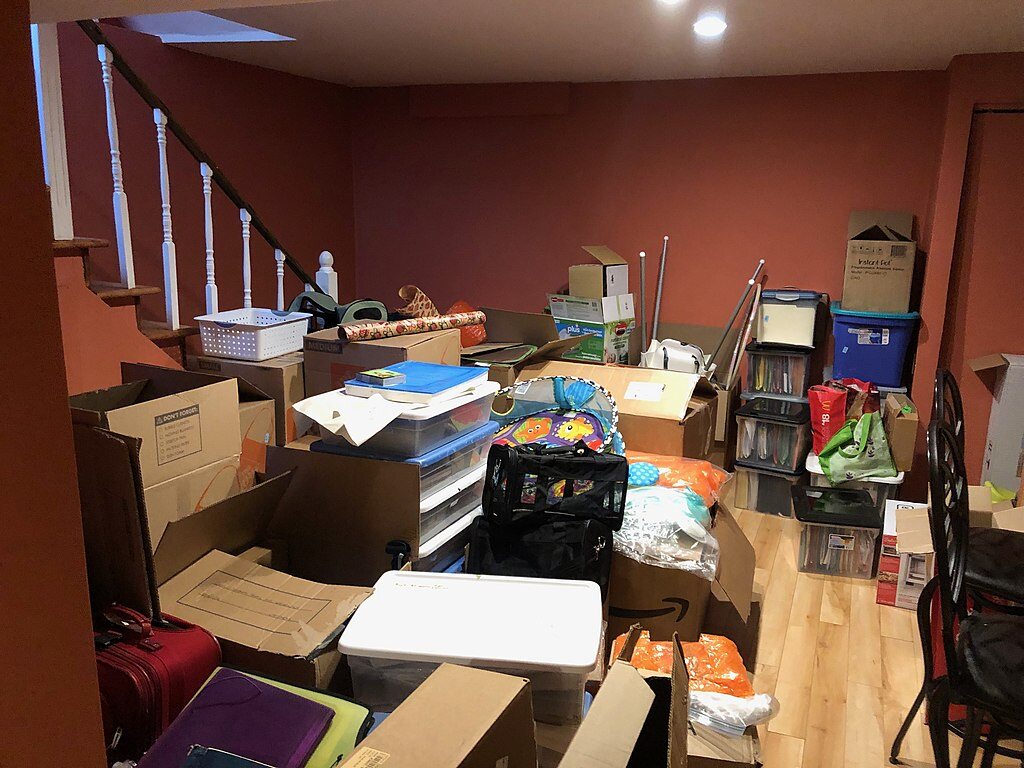
Are pest problems worse in older New England homes?
Pest problems can sometimes be worse in older homes due to factors like aging building materials (like rotting wood), unsealed entry points, and mature landscaping harboring many pests.
What are some common pests in Massachusetts, Maine, and New Hampshire?
New England is home to many pests including ants, spiders, centipedes, millipedes, cockroaches, crickets, and silverfish, to name just some. We also have large populations of stinging insects and rodents, like mice.
Are professional treatments safe for kids and pets?
All the products we use are applied by licensed technicians. We use an Integrated Pest Management (IPM) approach to limit the risk to your loved ones.
When is Professional Pest Control in Southern NH, Northeastern Massachusetts, and Southern Maine Necessary?
While there are certainly steps that you can take to reduce pests, at the end of the day, DIY home pest control efforts are only going to go so far.
The most effective solution for dealing with pests is going to be proactive professional pest control services. Even if you do all the right things to try and keep bugs out of your home, these pesky creatures are likely to find a way inside if they want it bad enough! And who wouldn’t want to cozy up in a comfy house as opposed to living outdoors!
Here at Seacoast Turf Care, we can help you with your pest control needs.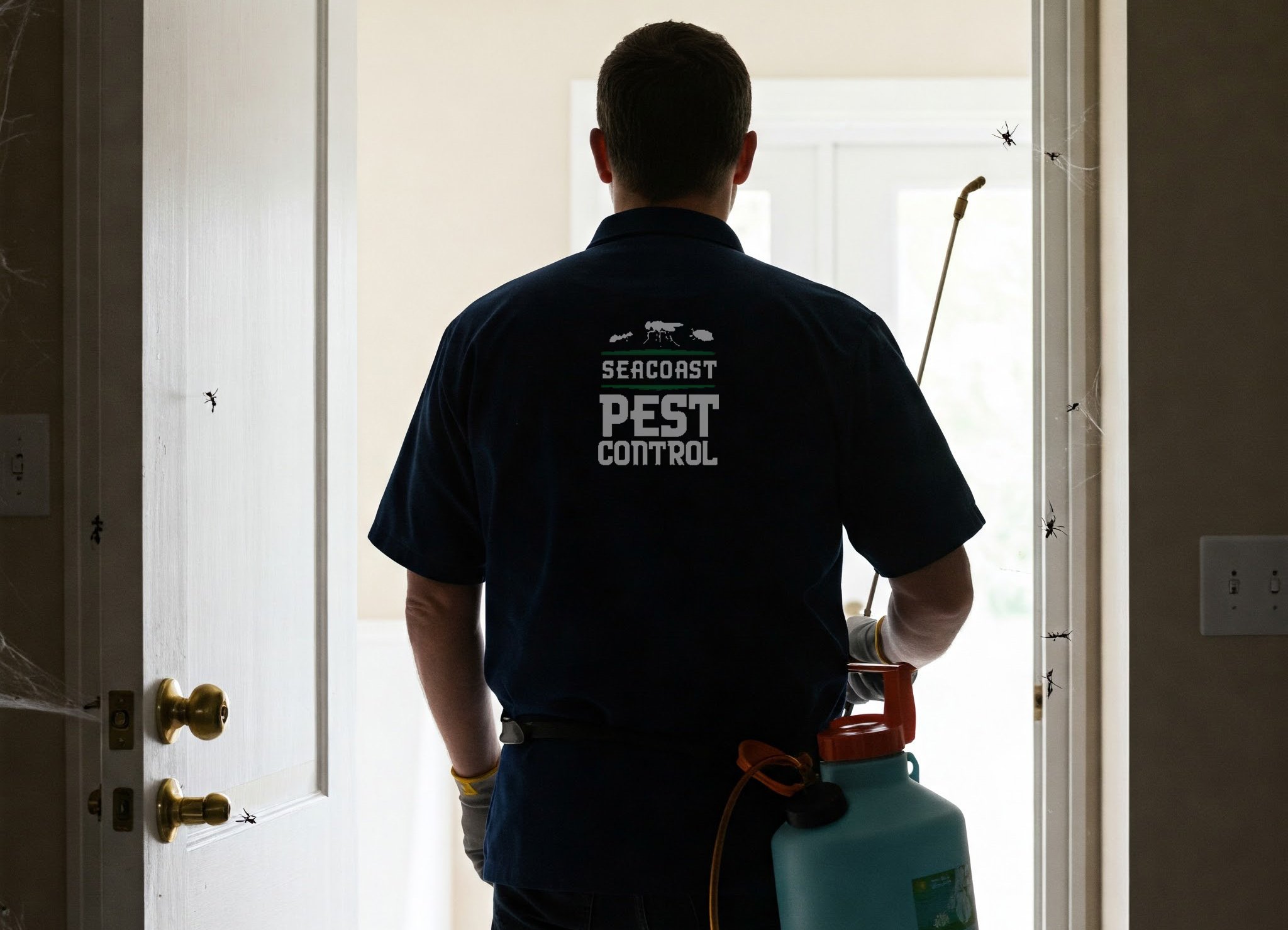
Our pest control services cover most of the common household pests like crickets, spiders, and more found throughout New Hampshire, Massachusetts, and Maine. It also covers mice. Without professional assistance, pests like these can be tough to address.
With effective, quarterly treatments, you can keep many pests out of your home. This is important as sometimes a simple bug problem can become a full-blown infestation if given the chance.
If you truly want peace of mind that you’re keeping pests away, investing in professional pest control is a wise choice. By taking the right steps, you’ll be able to get back to enjoying life as usual.
Want to learn more about how pest control services can protect your family and give you peace of mind? At Seacoast Turf Care, we service NH towns near Stratham, North Hampton, Exeter and many more. Get pest control pricing for your Southern NH, Southern Maine, or Northeastern Massachusetts property.
Image Sources: spider web, caulking, cluttered basement
Ready to get the lawn you've been wishing for?
