

One of the biggest frustrations that homeowners feel when it comes to lawn pests is the fact that the damage often goes unnoticed until it’s severe. This is understandable. Most lawn pests are sneaky and remain hidden. This includes sod webworms.
Sod webworms generally hide during the day and come out at night to eat. Many homeowners do not realize they have a problem until the damage becomes obvious, which makes proactive treatment incredibly important.
Jump To:
What Are Sod Webworms?
What Do Sod Webworms Look Like?
Understanding the Sod Webworm Life Cycle
Signs of Sod Webworm Damage
What Conditions Are Favorable for Sod Webworms?
How to Treat for Sod Webworms
FAQs on Sod Webworms
When Should You Call a Lawn Care Professional?
What Are Sod Webworms?
Sod webworms are the caterpillar stage of lawn moths. Sod webworm damage occurs when these pests feast directly on the grass, usually clipping blades off right at the base.
This concentrated feeding at the crown can lead to death.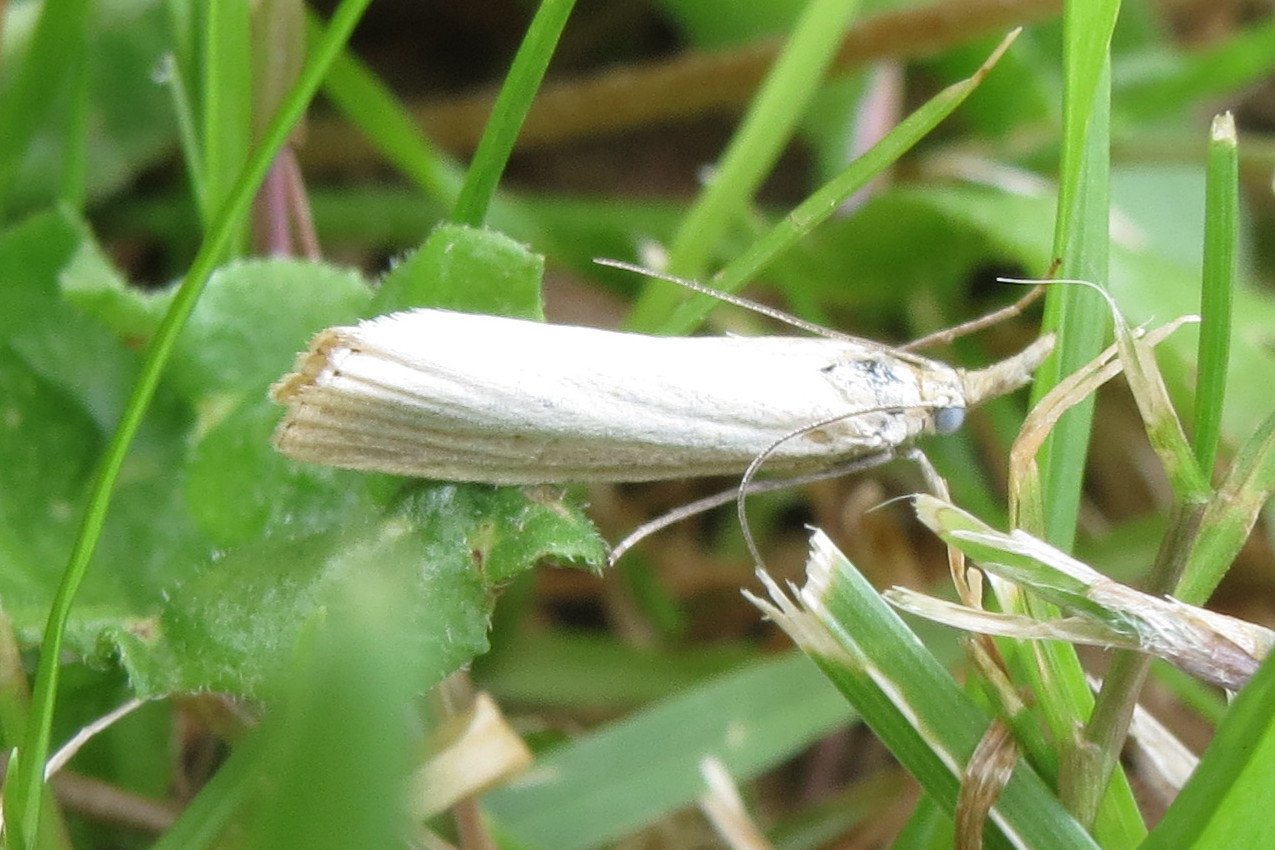
The most destructive period for this pest is July and August, as New England lawns are already under stress from summer heat and drought. If you have a problem with sod webworms, this is when you might notice the damage.
What Do Sod Webworms Look Like?
Sod webworms look like small, spotted caterpillars hiding in the grass. At full size they can grow up to one inch in length. They tend to be off-white, greenish, or grayish in color.
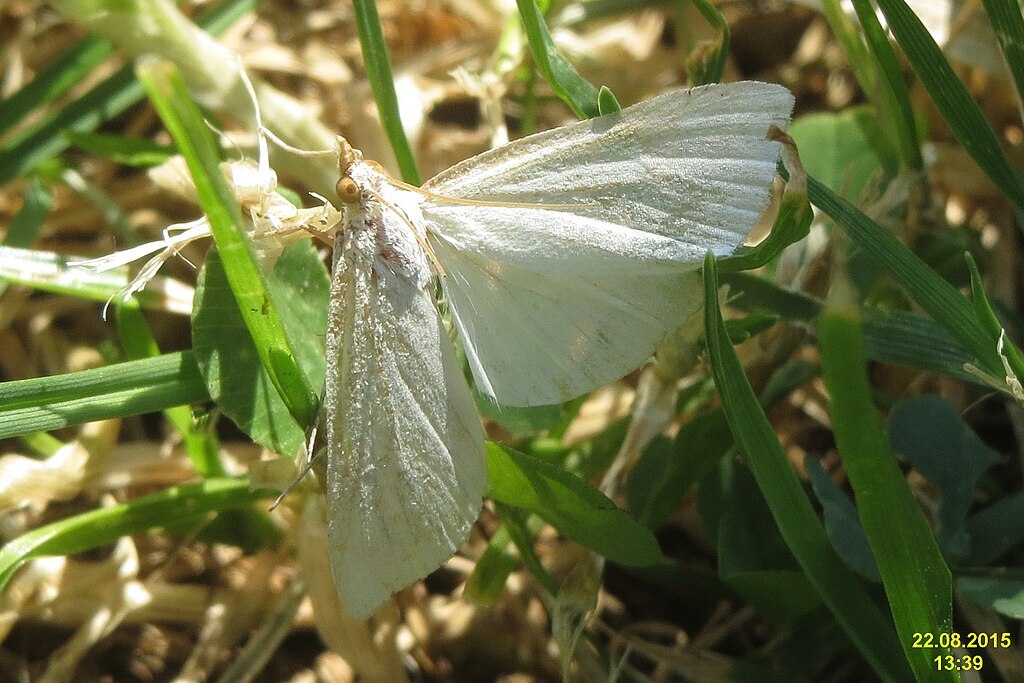
If you have white moths in the lawn, then the sod webworms have turned into adults. Most often you will see these as opposed to the actual worms. They are now called lawn moths and they no longer eat the grass. However, they will lay the next generation of eggs, meaning white moths in grass can continue to be a problem.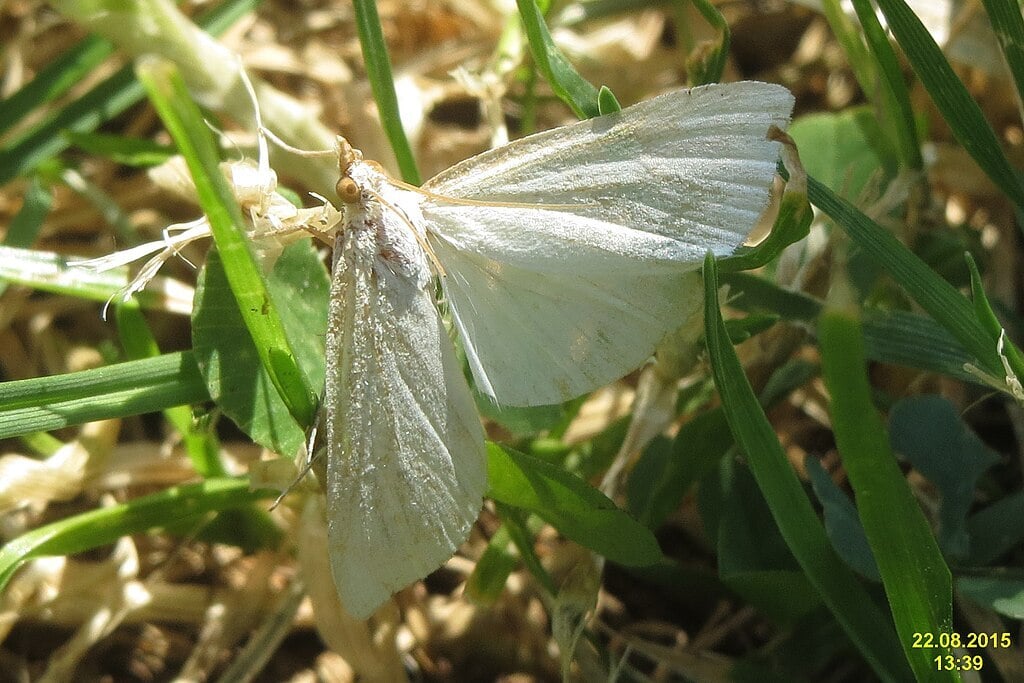
Lawn moths are typically identified by their “snout.” They have a pair of elongated mouthparts that stick out like a nose. They are usually white or tan and can lay up to 200 eggs which will hatch in as fast as a week.
Understanding the Sod Webworm Life Cycle
The sod webworm life cycle has four stages: Egg, larva, pupa, adult. These lawn pests can go through that life cycle as many as 2 to 3 times in a year.
After lawn moths drop their eggs, they can hatch within 7 to 10 days.
In the larva stage (the caterpillar stage), sod webworms will begin feasting on your grass. Sod webworm larvae will also work to create tunnels where they spend their time during the day. At night, they come out to feed, clipping grass at its base and dragging blades back into their tunnels to eat.
The larva stage can last as long as 6 weeks.
Once full-grown, sod webworms enter the pupa stage where they begin their transformation into lawn moths.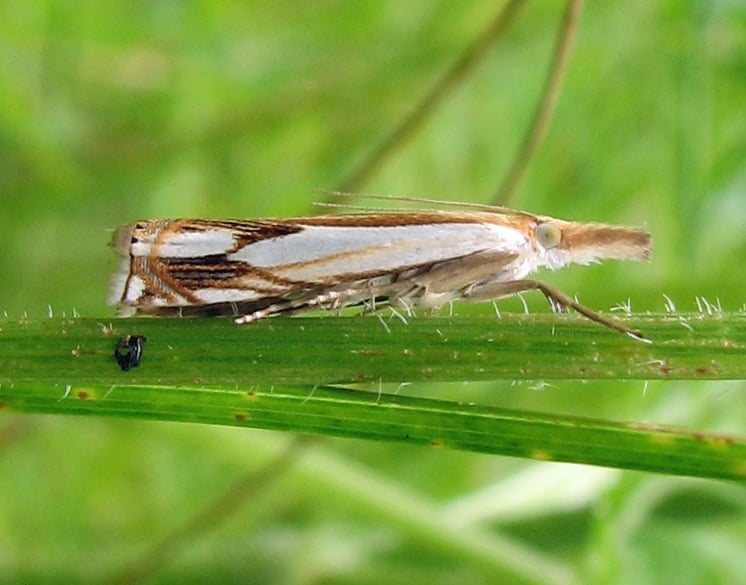
Finally, in the adult lawn moth stage, these pests are solely focused on reproduction. Their only job is to mate, produce and lay eggs, and restart the cycle.
Signs of Sod Webworm Damage
Sod webworm damage typically looks like brown spots in the lawn. This is how a large majority of lawn problems show up, so we know it can be challenging to identify exactly what’s going on.
If a lawn is in a period of drought, sod webworm damage can be particularly tough to spot because the entire lawn might be brown.
Some of the ways to specifically identify that the damage is from sod webworms include:
-
Irregular patches: Drought-stress is going to be uniform, but sod webworm damage will show up as irregular patches.
-
Ragged and chewed grass blades: If you get an up-close view of the grass itself, you’ll notice that it looks ragged and chewed. It might also look visibly clipped off.
-
Droppings: Tiny green droppings (called “frass”) that are left behind by sod webworms can also be a clue.
-
Visual identification: Sod webworms are not exactly small. The problem is, they are nocturnal and hidden during the day. Going out at night with a flashlight is the most likely time that you’ll be able to spot them in action. At night, sod webworms leave their tunnels. Pull the grass apart and look in the thatch layer. You might also notice tiny lawn moths fluttering about at dusk.

What Conditions Are Favorable for Sod Webworms?
Sod webworms thrive in warm conditions and can be a problem during New England summers. Here are some of the favorable conditions for this pest:
-
Heavy thatch layer: Because they love to hide, sod webworms love a lawn with a thick layer of thatch. The best way to keep your thatch at a healthy level is by keeping up with regular lawn aeration.
-
Drought-stressed lawns: Since sod webworms love dry and warm conditions, a drought-stressed lawn is highly favorable. Unfortunately, a lawn that is already weak and stressed from drought will struggle to deal with the chewing that sod webworms do.
-
Over-fertilized lawns: Too much nitrogen can push tender new growth that is very appealing to young caterpillars.
How to Treat for Sod Webworms
Sod webworm treatment involves using curative products that attack this pest in the larval stages. This is not likely to be a standard treatment included in a lawn care program, as you might never have a problem with this pest.
At Seacoast Turf Care, our program prioritizes covering subsurface grubs with preventative products that keep them from hatching. Grubs are particularly destructive since they’re hidden at the subsurface level, where they feed on roots.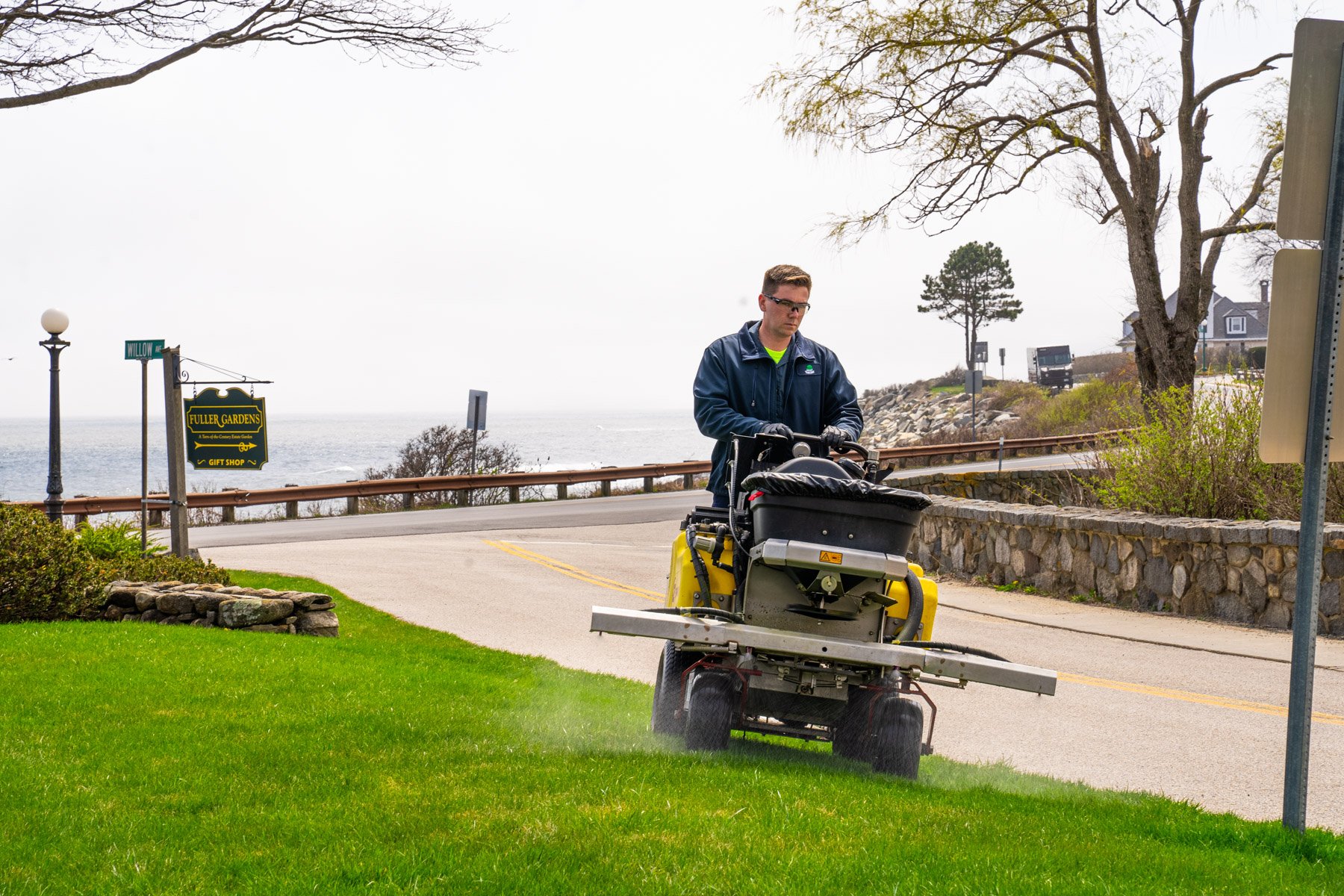
If you end up having an issue with any other surface-feeding insect (not only sod webworms, but also chinch bugs, cutworms, or armyworms), then we can add a treatment option to your lawn care program to address this issue. We meet with homeowners to discuss their options if a problem arises.
We don’t include these treatments in our programs since (as mentioned), many homeowners may never deal with them. We don’t want you to pay for treatments that you don’t need.
However, we will keep a close eye on your lawn in order to spot problems early on. If you notice your lawn turning brown, we also encourage you to reach out so that we can figure out what’s going on.
If you have existing sod webworm damage, you might need restoration efforts. Aeration and overseeding can play an important role in filling in thinned-out or bare spots.
FAQs on Sod Webworms
Are white moths flying out of my lawn always sod webworms?
No, white moths flying out of the lawn are not always sod webworms. There are many types of grass moths, many of which are completely harmless.
What time of year are sod webworms most active in New England?
Sod webworms are most active in the summer (from June until August). July and August can be when sod webworm damage is the worst.
Can a lawn recover from sod webworm damage on its own?
Whether or not a lawn recovers from sod webworm damage is going to depend on the severity of the damage. Some light chewing and moderately thinned areas might bounce back on their own. But more severe damage might require overseeding or even sod replacement.
Will lawn fertilizer take care of sod webworms?
No, lawn fertilizer will not do anything to address sod webworms. However, fertilizer will supply nutrients that will help a lawn to grow faster (which could be considered as helpful with recovery).
How do I know if I’m dealing with sod webworms or grubs?
The best way to tell the difference between sod webworms and grubs is by trying the “tug test.” If you tug on the grass and it is completely detached, the problem is probably lawn grubs (which feed on roots).
When Should You Call a Lawn Care Professional?
Your lawn is important to you and you want to make sure that it doesn’t succumb to problems. That’s why it’s always helpful to have help from professional lawn care in Southern NH, Northeastern MA, and Southern ME.
At Seacoast Turf Care, it is always our goal to provide you with peace of mind.
While you can’t always prevent lawn pests, the other good news is that when you’re already investing in lawn care that promotes a thick and healthy lawn, your lawn should fare better against damage. Lawn pests tend to be most destructive to lawns that are already thin and struggling. This is when the damage is going to be severely noticed.
But if your lawn is thick and healthy, it won’t be so easily destroyed.
At Seacoast Turf Care, we’re here for you and any of your lawn woes! When you partner with us, you’ll find that we’re serious about helping to take away your worries and nurture a lawn you’ll love.
Ready to be where the grass is greener, healthier, and free from pests? Get lawn care pricing for your Southern NH, ME, or MA lawn.
Image Sources: webworm damage, white lawn moth, mature sod webworm
Ready to get the lawn you've been wishing for?